Vinyl Windows and Doors
Replacement & Installation
South Bay | Los Angeles | Orange County
Schedule a Quote
Schedule a Quote
|
Bay Cities Construction is a licensed general contractor installing vinyl windows and doors across the South Bay, greater Los Angeles, and Orange County. We handle full-frame installation, the repairs behind the opening, and the permits, so one contractor carries your project from the first measurement to the final install.
Vinyl windows and doors are energy-efficient, low-maintenance replacements for older or failing units, and vinyl is the most common window material homeowners choose across Southern California. Bay Cities Construction installs vinyl windows and doors in El Segundo, Hermosa Beach, Manhattan Beach, Redondo Beach, the Palos Verdes Peninsula, Torrance, Newport Beach, and throughout greater Los Angeles and Orange County. As a licensed general contractor, we do more than set a new unit into the existing opening. We repair the framing and waterproofing behind it, replace the frame in full when a project calls for it, and handle the structural work and permits when an opening changes.
Are vinyl windows a good choice in Southern California?
Vinyl windows deliver strong energy performance at a lower cost than wood or aluminum-clad, and they hold up well to the sun and salt air along the coast. Manufacturing has improved over the last decade, so today's vinyl frames seal tightly, resist warping, and require little upkeep beyond cleaning. As a replacement for older single-pane or aluminum windows, vinyl is the material that balances price, efficiency, and durability the best for most homes in Southern California.
Vinyl also meets California's current energy code, which matters more in 2026 than it did a few years ago. The frames pair with dual-pane Low-E glass to reach the U-factor and Solar Heat Gain Coefficient numbers that replacement windows are required to have in order to pass inspection.
Energy efficiency
Tight seals and dual-pane Low-E glass reduce heat transfer and help lower cooling costs in the Southern California climate.
Low maintenance
Vinyl frames do not need painting or sealing. They clean easily and resist the warping that affects wood over time.
Coastal durability
Vinyl stands up to UV exposure and salt air without corroding, which suits homes near the water.
Cost
Vinyl costs less than wood and aluminum-clad while delivering comparable energy performance.
What are the different vinyl window styles?
We install vinyl windows in every common operating style, matched to how a room is used and to the look of the home. Here are the styles homeowners ask for most.
Single-hung
The bottom sash slides up while the top stays fixed. A common and cost-effective replacement style.
Double-hung
Both sashes move, which makes cleaning easier and improves airflow control.
Horizontal slider
One or both panels slide side to side. A good fit for wide openings and modern elevations.
Casement
Hinged on the side and cranked outward for a tight seal and full ventilation.
Awning
Hinged at the top and opens outward, so it can stay open in light rain. Common above sinks and in bathrooms.
Picture
A large fixed pane that does not open, built to maximize light and views.
Bay and bow
Projected assemblies that add interior space and dimension to a room's exterior wall.
Garden and specialty shapes
Custom shapes and garden windows for kitchens, stairwells, and architectural openings.
How each window style operates
Single-hung
Double-hung
Horizontal slider
Casement
Awning
Picture
What colors do vinyl windows come in?
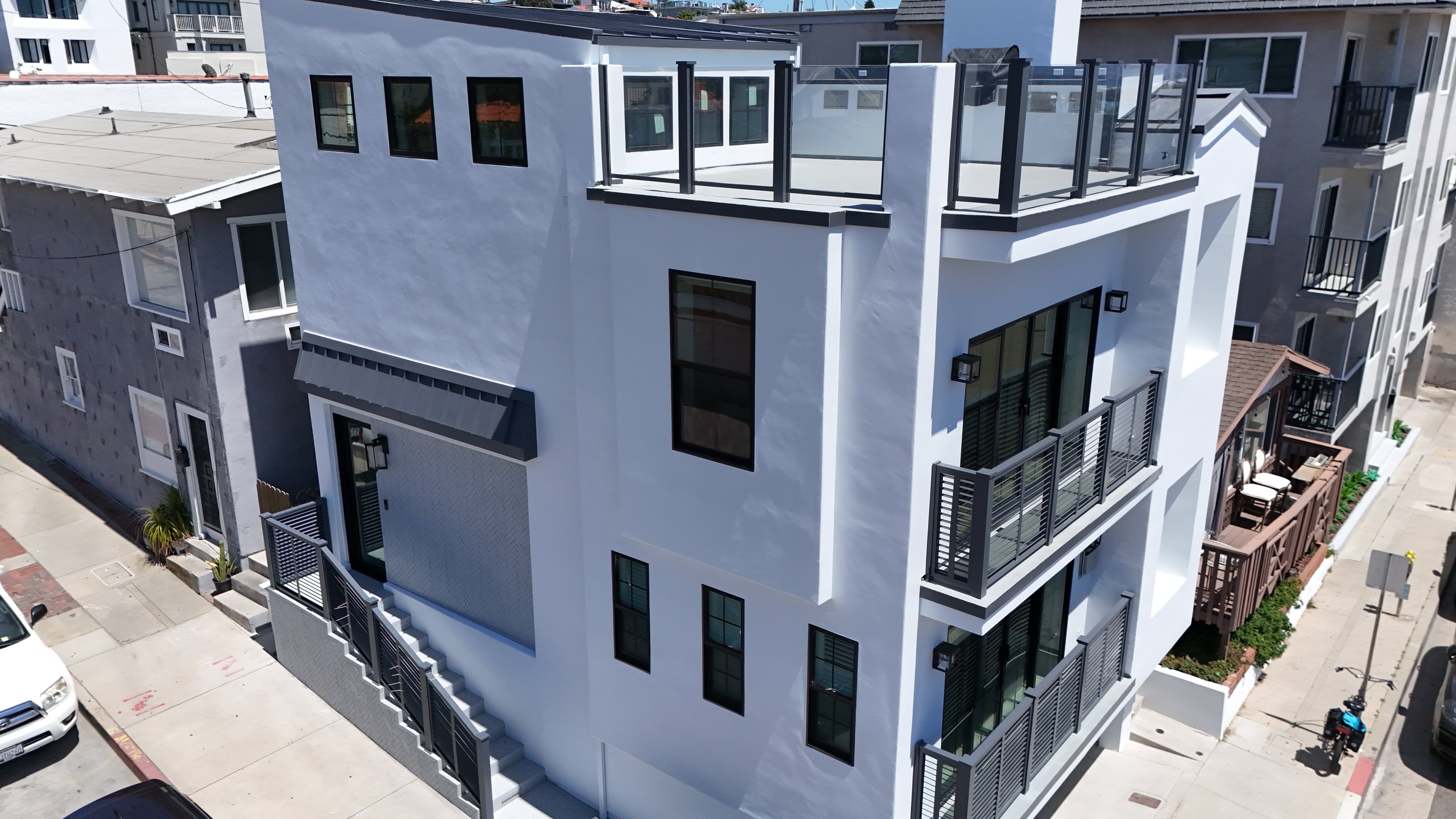
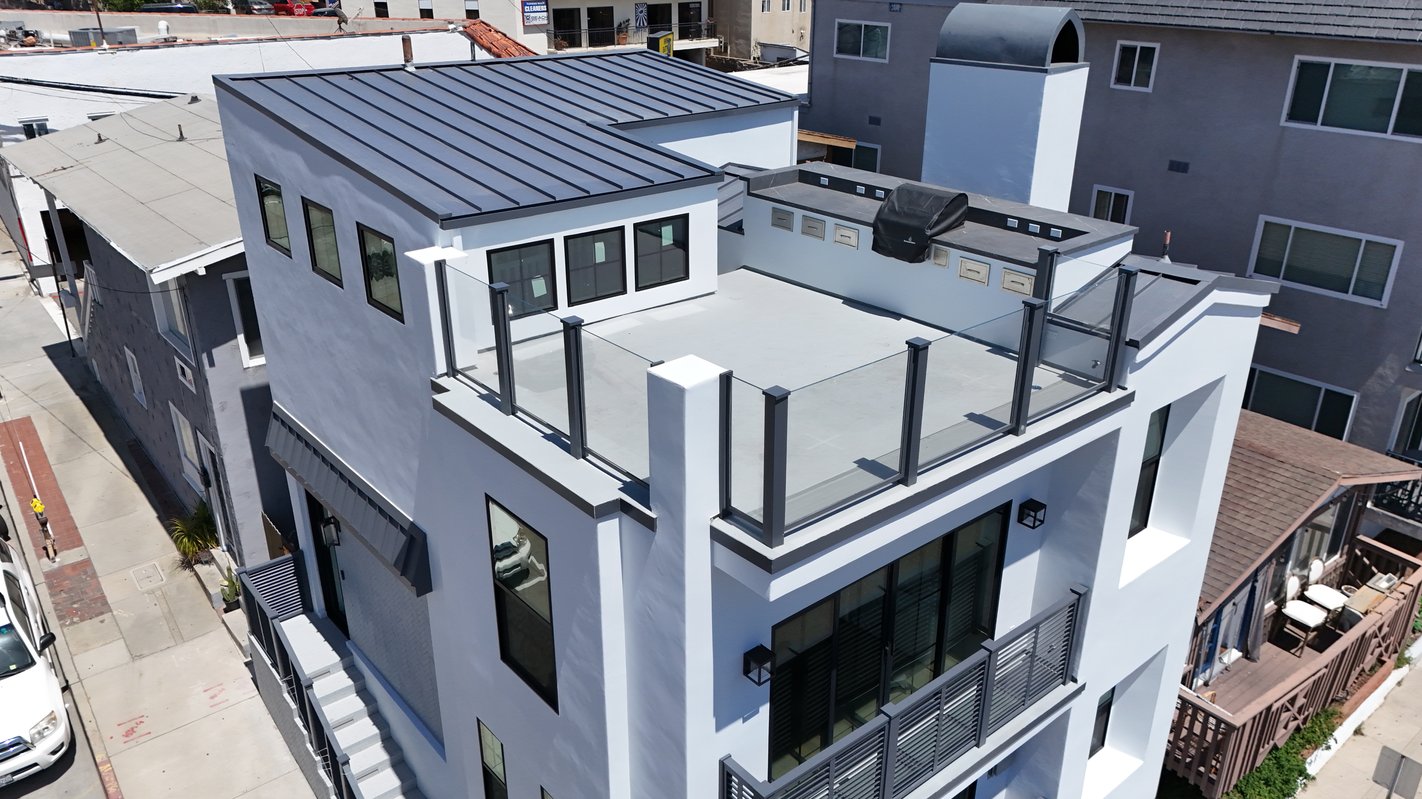
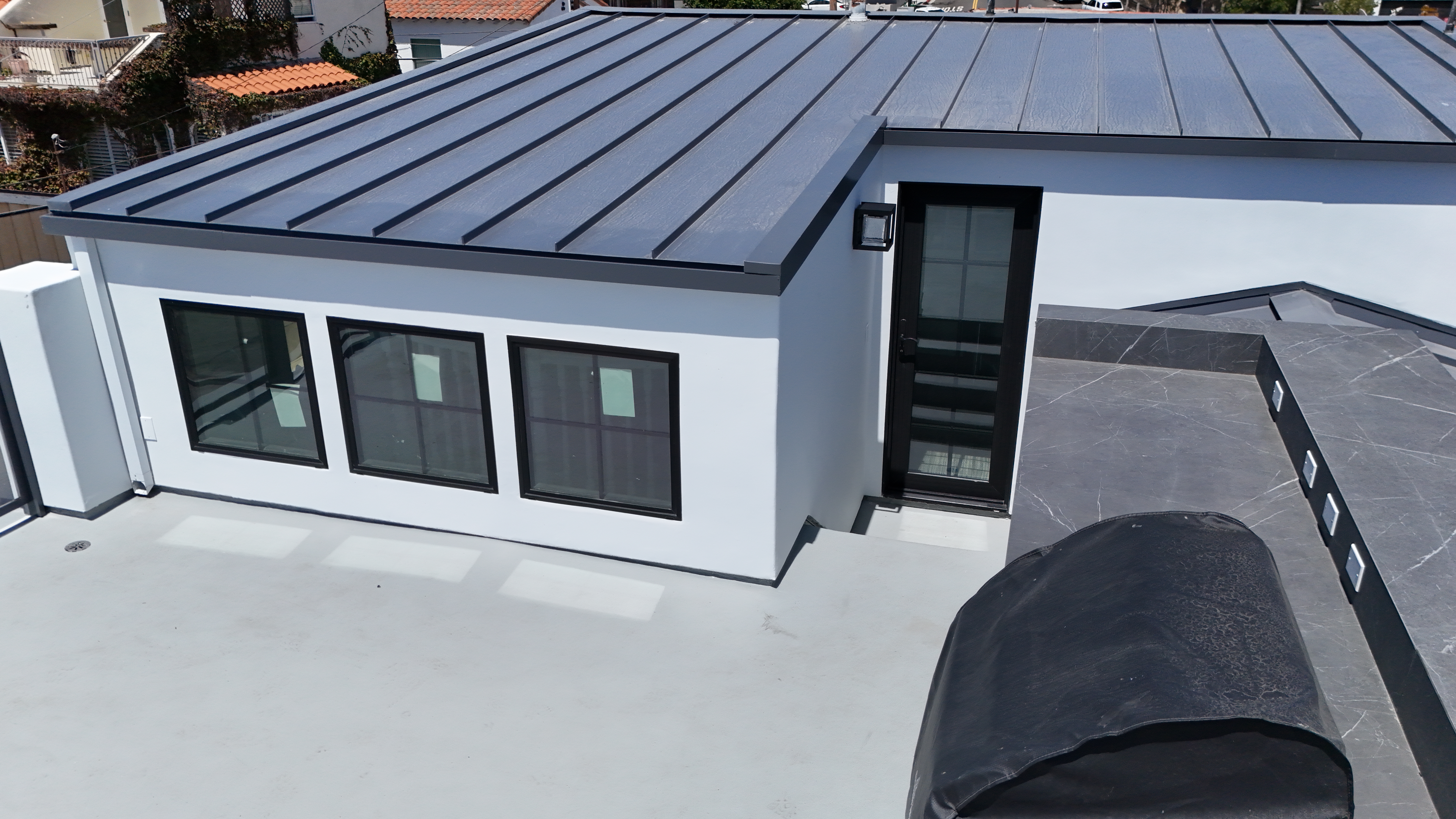
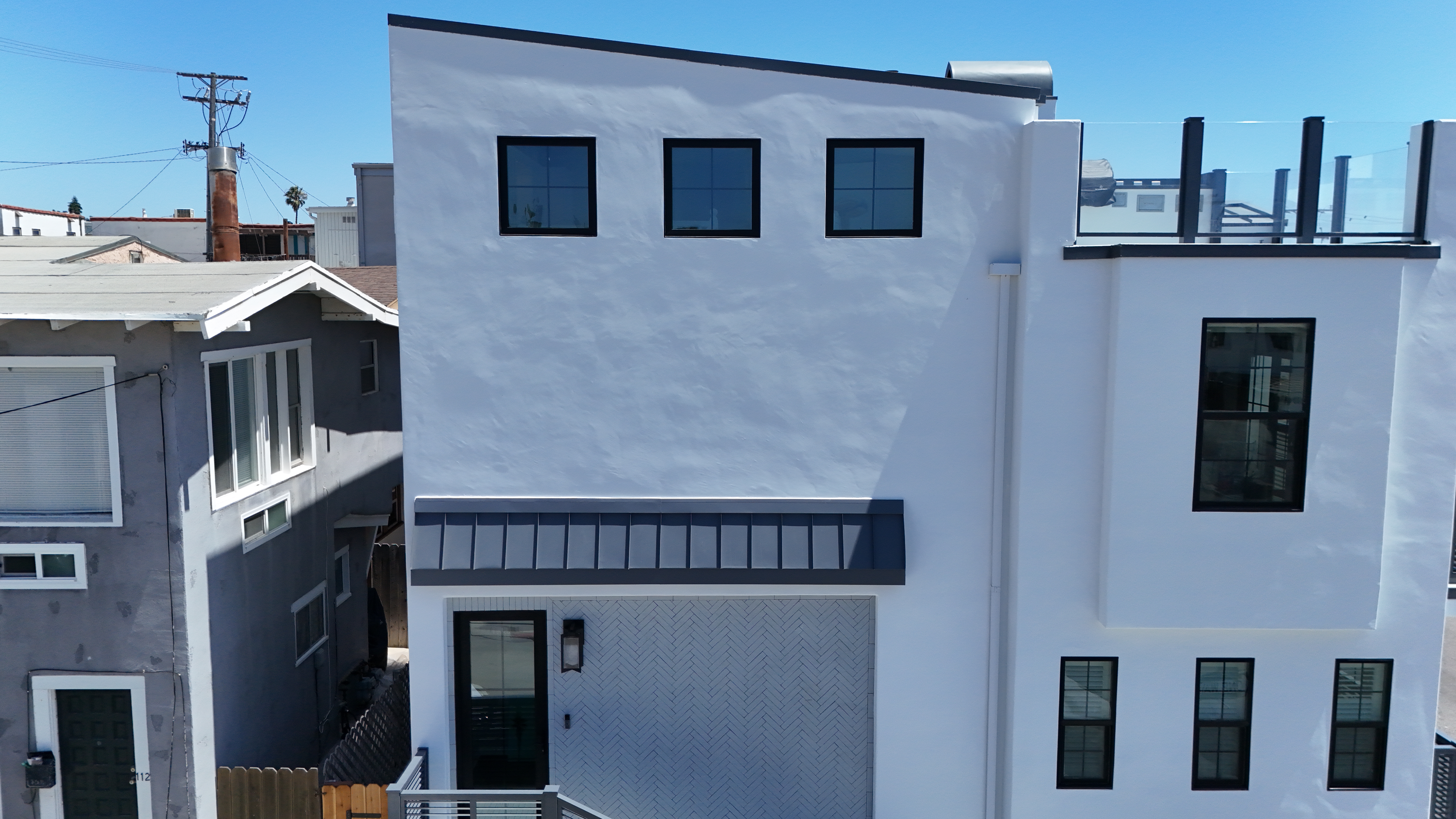
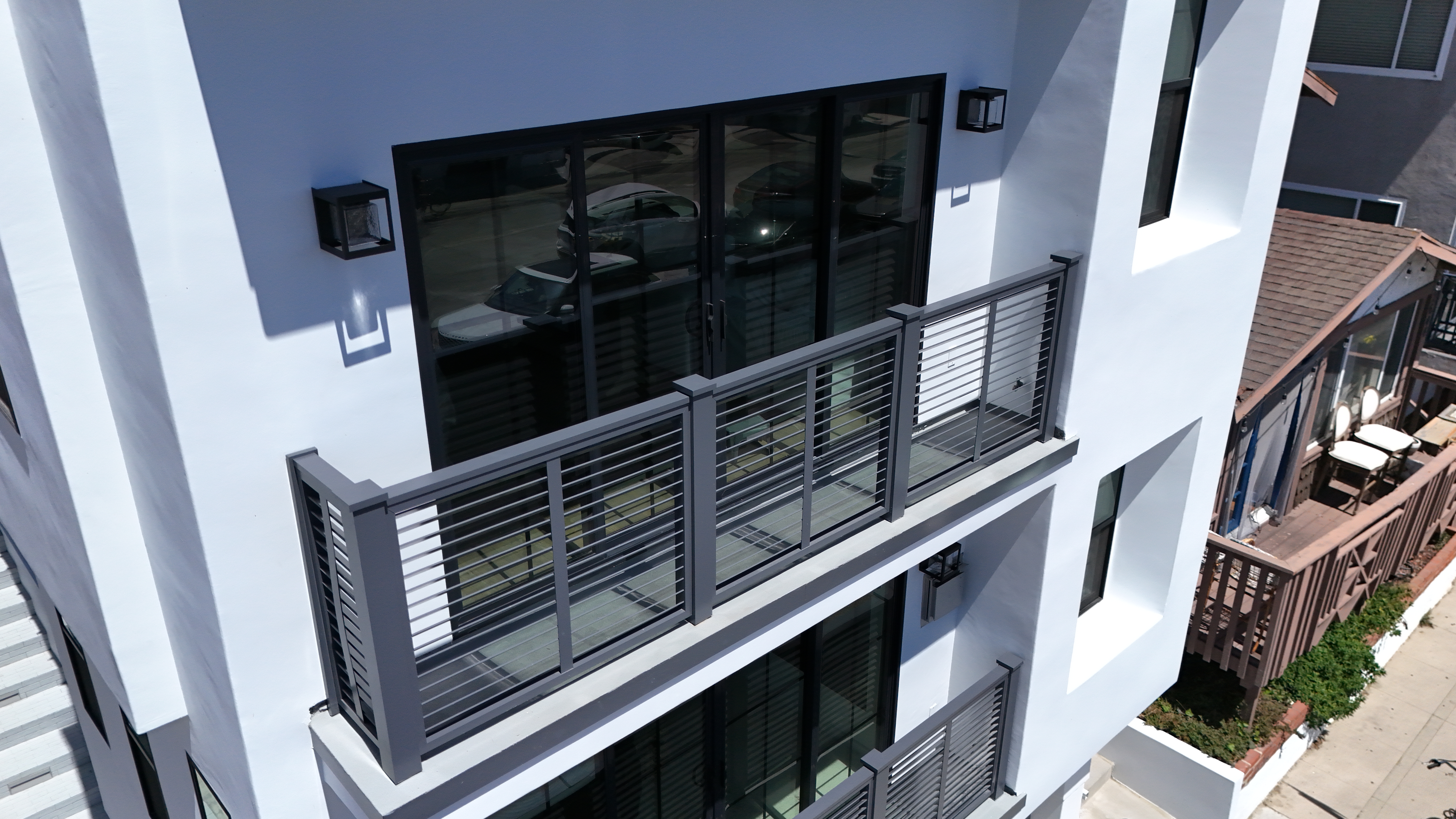
Vinyl is no longer limited to white and almond. Today's vinyl windows come in a range of frame colors and finishes, including black and other dark tones that many homeowners assume require a wood or aluminum-clad frame. Black vinyl windows have become one of the most requested looks in Southern California, and they pair well with both modern and traditional elevations.
Many product lines also offer a different color inside than outside, so you can match a dark exterior to the architecture while keeping a lighter interior that fits the room. We help you select a finish that suits the home and holds up to coastal sun exposure over time.
Recent project: black vinyl windows and doors
What types of vinyl doors can you install?
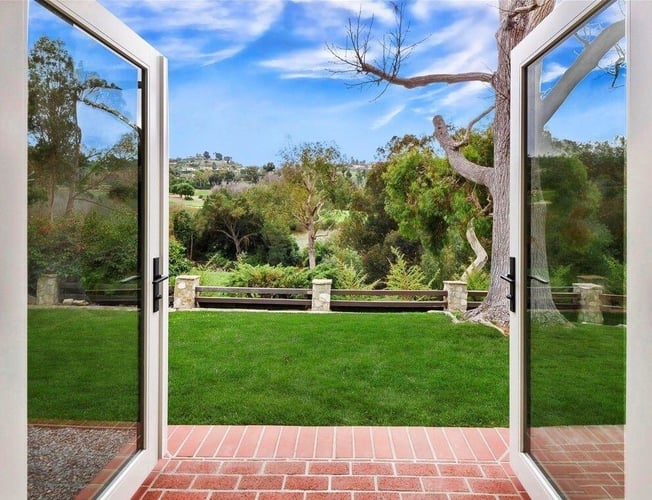
Vinyl patio and sliding doors seal and perform far better than the older single-pane units they usually replace, and they carry the same energy and maintenance advantages as vinyl windows. We install them with dual-pane Low-E glass and handle the waterproofing and framing around the opening as part of the job.
Sliding glass doors
Smooth-operating vinyl sliders that connect a living space to a patio or yard with a tight seal.
Patio doors
Dual-pane patio doors that seal out drafts and hold up to daily use.
French doors
Swinging doors for a traditional look, including replacements for an existing sliding door.
How do vinyl windows compare to wood, fiberglass, and aluminum?
Homeowners choosing a window material usually weigh cost, maintenance, and performance in a coastal climate. Vinyl leads on price and upkeep, wood offers the most refined interior, fiberglass sits at a premium, and older aluminum frames generally fail the current energy code. The table below shows how the four materials compare for a Southern California replacement.
| Material | Cost | Maintenance | Coastal performance |
|---|---|---|---|
| Vinyl | Lowest | Very low, no painting or sealing | Resists salt air and UV without corroding |
| Wood | High | Regular painting and sealing | Needs upkeep to resist moisture near the coast |
| Fiberglass | Premium | Low | Strong and stable, at a higher price point |
| Aluminum | Low | Low | Older frames usually fail the current U-factor standard |
Older aluminum windows are common in Southern California homes built decades ago, and they transfer heat and cold through the frame. Once they come out, the framing and stucco around them are often in worse shape than they looked, which is where a licensed general contractor matters.
- ✓
Vinyl is the best value for most Southern California homes, with low cost, low upkeep, and strong energy performance.
- ✓
Wood suits homeowners who want a refined painted interior and accept regular maintenance.
- ✓
Fiberglass fits projects that call for maximum strength and stability at a premium price.
- ✓
Older aluminum frames are due for replacement, since they usually fail the current energy code.
Are vinyl windows energy efficient?
The glass package inside a vinyl window drives most of its energy performance. Dual-pane glass is now the standard for replacement windows in California, and triple-pane is available where you want extra insulation or sound control. A Low-E coating reflects heat while letting light through, which keeps rooms more comfortable and reduces cooling load.
Every window certified for sale in California carries a National Fenestration Rating Council label that lists two numbers building inspectors check: the U-factor, which measures how well the window resists heat transfer, and the Solar Heat Gain Coefficient, which measures how much solar heat the glass lets in. Lower numbers are better on both, and vinyl frames with Low-E glass reach the values the code now requires.
Acoustic glass
Sound-reducing glass packages help homes under the LAX flight paths and along busy corridors stay quieter inside.
Coastal durability
Vinyl frames and quality seals resist the salt air and UV that wear down windows near the water.
More panes and a Low-E coating lower the U-factor, which improves energy performance. Dual pane is the standard for replacement windows in California, and triple pane adds insulation and sound control.
What are the best vinyl window brands?
We source our vinyl windows and doors from a Southern California manufacturer, which keeps lead times short and lets us stand behind both the product and the installation. When homeowners compare vinyl brands, the numbers that matter are the NFRC ratings on the label and the terms of the product warranty. A window that meets the current U-factor and SHGC standards and carries a solid warranty will serve a coastal home well.
The names you see most in California, such as Milgard and Anlin, are widely researched for good reason, and any quality vinyl window you consider should hit the same performance marks. We are glad to walk you through how our product compares on the ratings that affect energy performance and code compliance.
- ✓
U-factor on the NFRC label, where a lower number means better insulation.
- ✓
Solar Heat Gain Coefficient on the NFRC label, where lower reduces heat from the sun.
-
✓Warranty terms on both the product and the installation.
- ✓
Frame construction and hardware quality, which affect how the window seals and lasts near the coast.
What does Title 24 require for replacement windows in 2026?
California tightened its Title 24 energy code on January 1, 2026, and the change affects replacement windows statewide. For a full replacement project, new windows generally need a U-factor of 0.30 or lower and a Solar Heat Gain Coefficient of 0.23 or lower to pass inspection. Smaller projects that replace less than 75 square feet of total window area get slightly relaxed limits, around a U-factor of 0.40 and an SHGC of 0.35. Replacing only the glass or sash while leaving the frame in place counts as a repair and does not trigger the code.
Vinyl windows with dual-pane Low-E glass reach these numbers, which is one reason vinyl is a practical choice under the updated code. Older aluminum frames usually do not, so a like-for-like aluminum replacement is often off the table now. The inspector checks the NFRC label against the requirement for your climate zone at final inspection, and windows that do not comply get red-tagged and have to be replaced at your expense.
We handle compliance as part of the project, including confirming the correct requirement for your address, selecting windows that meet it, and preparing the CF-1R documentation your building department needs.
| Project type | U-factor (max) | SHGC (max) |
|---|---|---|
| Full replacement, 75 sq ft or more of window area | 0.30 or lower | 0.23 or lower |
| Smaller project, under 75 sq ft of window area | 0.40 or lower | 0.35 or lower |
| Glass or sash only, existing frame stays | Counts as a repair, so Title 24 is not triggered | |
Exact requirements depend on your climate zone. We confirm the number for your address before we order.
What is the difference between full-frame and pocket installation?
There are two ways to install a replacement vinyl window, and the right one depends on the condition of the existing frame. Bay Cities offers both, and many window shops offer only the pocket method so they can avoid trim and stucco work.
Pocket installation
The new window is set inside the existing frame, which is faster and lower in cost. It works when the frame and the wall around it are sound.
Full-frame installation
The old window comes out down to the opening, and the install includes new flashing, new trim, and stucco repair. This is the right method when the frame is damaged or there is water intrusion around the opening.
When does a window project need a licensed general contractor?
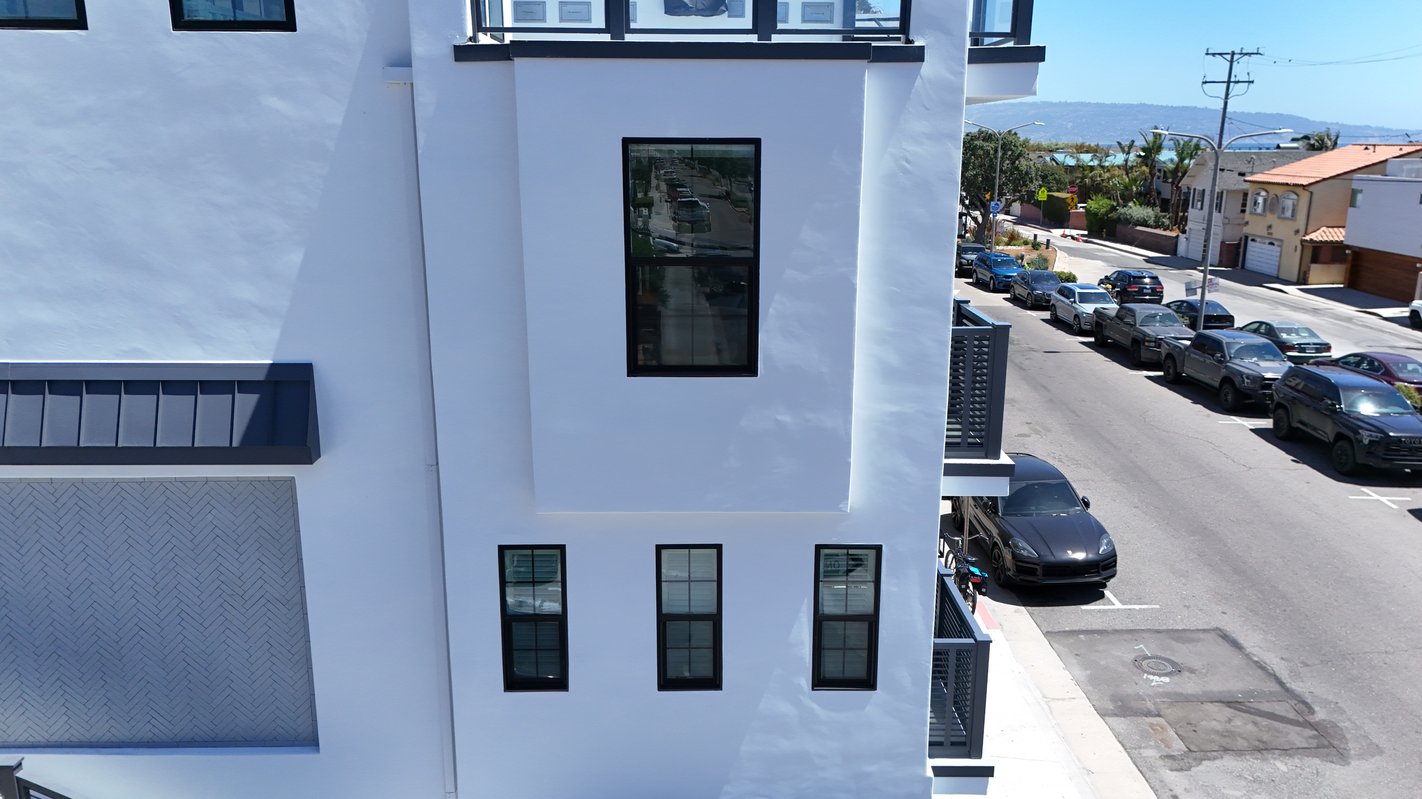
A straight like-for-like vinyl replacement where the frame and wall are sound is work a window company can do, and so can we. Some projects involve the wall around the opening, and those need a licensed general contractor. These are the situations where a window shop usually stops and where our license and crews make the difference.
Rot or water damage
When the framing around an opening has rot or water damage, we repair the wood and the waterproofing before the new window goes in, so the problem does not get sealed behind a new unit.
Structural changes
Turning a window into a door or widening an opening changes the structure of the wall and requires a correctly sized header, a permit, and an inspection.
Older coastal homes
Once original aluminum or single-pane windows come out, the framing and stucco around them are often in worse shape than they looked. We handle those repairs in the same project.
Remodels and additions
When windows and doors are part of a kitchen remodel, a full home remodel, or an addition, one contractor coordinates the whole job and keeps the schedule in one place.
How much do vinyl windows and doors cost?
The cost of a vinyl window or door project depends on a handful of factors. Size and style set the base, the glass package adds to it, and the installation method matters, since full-frame installation with trim and stucco repair takes more labor than a pocket install. Any rot repair, structural change, or Title 24 compliance work is scoped on top of the window itself.
Because those factors vary from home to home, the most reliable way to plan a budget is to price your specific project rather than a per-window average. Our cost estimator gives you a starting range, and our written proposal after the property visit gives you the firm number.
-
Size and number of windows or doors being replaced.
-
Style and glass package, including Low-E, dual pane, and acoustic options.
-
Installation method, since full-frame with trim and stucco repair takes more labor than a pocket install.
-
Rot repair or structural changes to the opening, scoped on top of the window.
-
Title 24 compliance work required to pass inspection.
Are there tax credits or rebates for vinyl windows in 2026?
The federal Section 25C window tax credit expired on December 31, 2025, so there is no federal window tax credit for projects installed in 2026. Windows installed in 2025 can still be claimed on your 2025 tax return. A lot of window pages still promote the old credit, so it is worth knowing the current position before you plan around it.
Some state, utility, and insurance programs may still offer support depending on your city and utility, and we can point you to the ones that apply to your home.
-
The federal Section 25C window tax credit expired December 31, 2025, so there is no federal window credit for 2026 installs.
-
Windows installed in 2025 can still be claimed on your 2025 tax return.
-
Some state, utility, or insurance programs may still apply depending on your city and utility.
Do you need a permit to replace windows in Southern California?
Whether a window project needs a permit depends on the work and on the city. Each city runs its own building department with its own process, so Redondo Beach, Torrance, Newport Beach, and Irvine each handle permits on their own terms. A permit is generally required when the work changes the structure of the wall, such as widening an opening or converting a window into a door, and rules for like-for-like replacement vary from one city to the next.
As a licensed general contractor, we pull the permits your project requires and coordinate the inspections, so the work is documented and passes cleanly. That matters more under the 2026 energy code, since the inspector verifies window compliance at final inspection.
-
✓Widening or resizing a window opening
-
✓Converting a window into a door
-
✓Any change to the structure of the wall
-
✓Like-for-like replacement in the same opening, since each city sets its own rule
Our Process
Submit a request through the website.
We learn about the project and confirm it is a good fit.
We assess the work and take measurements.
We scope the project and send a written proposal.
Our team of pro's installs your windows and doors.
Do you work with HOA's and Property Managers to replace windows and doors?
Bay Cities works with HOA boards and property managers on vinyl window and door replacement across multi-unit and multi-building properties. We plan the schedule around board approvals and owner notifications, match the existing building elevations and architectural guidelines, and stage the work around residents so the disruption stays manageable. One licensed general contractor scopes, permits, and installs the whole project, keeps the property compliant with the 2026 energy code, and provides a proposal for the full property rather than pricing one unit at a time.
-
✓Scheduling around board approvals and owner notifications.
-
✓Matching existing building elevations and architectural guidelines.
-
✓Staging the work around residents to keep disruption manageable.
-
✓Pulling permits and coordinating inspections across the property.
-
✓Keeping the property compliant with the 2026 energy code.
-
✓A single proposal for the full property rather than pricing one unit at a time.
Why choose Bay Cities for vinyl windows and doors?
CSLB #842614, with the license and experience to handle structural work and permits, not only installation.
Two decades serving the South Bay, greater Los Angeles, and Orange County.
We replace the frame in full and repair the trim and stucco around it when a project calls for it.
Waterproofing is core to our work, so damage around an opening gets repaired before the new unit goes in.
Areas we serve
We install vinyl windows and doors across Orange County and Los Angeles County, including these communities.
Frequently asked questions about vinyl windows and doors
-
Are vinyl windows any good?
Yes. Vinyl windows offer strong energy efficiency and low maintenance at a lower cost than wood or aluminum-clad, and they hold up well to coastal sun and salt air. For most Southern California homes replacing older windows, vinyl is the material that best balances price, performance, and durability.
-
Can vinyl windows come in black?
Yes. Vinyl windows are available in black and other dark finishes, and many lines can pair a dark exterior with a lighter interior. Black vinyl is one of the most requested looks in Southern California and gives you a dark frame without the cost of wood or aluminum-clad.
-
Do vinyl windows meet California Title 24 in 2026?
Vinyl windows with dual-pane Low-E glass meet the updated Title 24 standards that took effect on January 1, 2026. Full replacement projects generally need a U-factor of 0.30 or lower and an SHGC of 0.23 or lower. We confirm the requirement for your climate zone, select compliant windows, and prepare the CF-1R documentation your building department needs.
-
Should I choose vinyl or fiberglass for a coastal home?
Both perform well near the coast. Vinyl costs less and resists salt air and UV with almost no upkeep, while fiberglass is stronger and more dimensionally stable at a premium price. For most Southern California homeowners, vinyl delivers the performance a coastal home needs at the better value.
-
Can you replace one vinyl window, or do I have to replace all of them?
You can replace a single window or every window in the home. Under the 2026 energy code, projects replacing less than 75 square feet of total window area follow slightly relaxed standards, while larger projects follow the full requirement. We scope the project to what you need and handle compliance either way.
-
Do I need a permit to replace vinyl windows?
It depends on the work and the city. A permit is generally required when the project changes the structure of the wall, such as widening an opening or converting a window into a door, and each city runs its own permit process. As a licensed general contractor, we pull the permits your project requires and coordinate the inspections.
-
Can you replace vinyl windows that have water damage or dry rot around them?
Yes. When there is rot or water damage in the framing around an opening, we repair the damaged wood and the waterproofing before the new window goes in. Waterproofing and framing repair is core to our work, so we handle the damage and the installation as one project.
-
Do you install vinyl patio and sliding doors?
Yes. We install vinyl sliding glass doors and patio doors with dual-pane Low-E glass, and we handle the waterproofing and framing around the opening as part of the job. Vinyl doors seal and perform far better than the older single-pane units they usually replace.
-
Is there a federal tax credit for new windows in 2026?
The federal Section 25C window tax credit expired on December 31, 2025, so there is no federal window tax credit for projects installed in 2026. Windows installed in 2025 can still be claimed on your 2025 tax return. Some state or utility programs may apply depending on your city, and we can point you to the ones that fit your home.
|
What's Next?
Still have questions about your Bay Cities Construction adventure. Then keep learning more.