1 min read
Balcony Repair and Waterproofing: Signs, Costs, and the Mistakes That Make It Worse
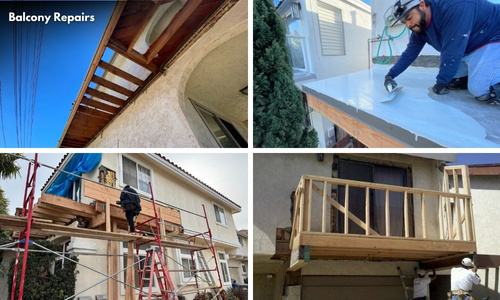
In Southern California, balcony waterproofing fails faster than almost anywhere else in the country. The combination of intense UV exposure, coastal...
13 min read
| 🚨 The SB 721 Deadline Has Passed |
|
The January 1, 2026 compliance deadline for SB 721 inspections has come and gone. If your multifamily building has not yet completed its required inspection, you may already be subject to daily fines of $100–$500. |
If you own or manage an apartment building in California, you should already be aware of SB 721 which is the state’s mandatory balcony inspection law. The compliance deadline of January 1, 2026 has now passed, and property owners who haven’t completed their inspections are facing the real prospect of accumulating daily fines, insurance complications, and significant legal liability.
But even if you’ve already had your inspection, there’s another challenge most guides don’t adequately cover: what happens next? The inspection is only the beginning. Now you have the repair process and what comes with it; the costs, the timelines, choosing the right contractor. This is where property owners actually need the most help.
This article covers everything you need to know about California Senate Bill 721 now that the deadline has passed, whether you still need to schedule your inspection or you’ve already received a report and need to get repairs done. It’s your complete roadmap from compliance requirements to completed repairs.
|
What's In This Guide |
|
|
|
||
|
|
|
|
|||
|
|
|
||||
|
|
|
|
|||
Senate Bill 721 (SB 721) is a California state law requiring mandatory safety inspections of exterior elevated elements (EEEs) which includes balconies, decks, stairways, walkways, and railings on multifamily residential buildings with three or more dwelling units.
The law was signed by Governor Jerry Brown on September 17, 2018, and took effect on January 1, 2019. It is codified in California Health and Safety Code Section 17973 and is commonly referred to as “The Balcony Inspection Bill.” Since 2024, the required inspections are also known as California E3 (Exterior Elevated Element) Inspections.
SB 721 was enacted in direct response to the 2015 Berkeley balcony collapse. It was one of the deadliest structural failures in recent California history. On June 16, 2015, a fourth-floor balcony at the Library Gardens apartment complex in Berkeley collapsed during a birthday celebration, killing six people and injuring seven others.
The investigation revealed that severe wood decay (dry rot) caused by prolonged water intrusion had compromised the cantilevered floor joists. The 8-year-old balcony’s laminated veneer lumber (LVL) joists had rotted to the point of catastrophic failure. Critically, building management had ignored tenant reports of warning signs — including mushrooms growing on the balcony surface and visible tilting.
This tragedy exposed a systemic gap: there was no requirement for ongoing inspections of exterior elevated elements after initial construction. SB 721 was created to close that gap and prevent similar disasters by mandating regular inspections and timely repairs.
| 💡 Key Takeaway |
|
SB 721 exists because routine inspections save lives. The Berkeley collapse was preventable — the warning signs were visible for years. SB 721 ensures property owners can no longer ignore deterioration of balconies and other elevated structures. |
SB 721 applies to owners of multifamily residential buildings with three (3) or more dwelling units that contain exterior elevated elements with wood or wood-based structural support. The property owner is legally responsible for ensuring compliance — not tenants or property management companies (though owners frequently delegate coordination to their managers).
Apartment buildings with 3 or more units
Affordable housing complexes
Senior care and assisted living facilities
Higher education residential housing (dormitories with 3+ dwelling units)
Military residential housing
Mixed-use buildings with 3+ residential units
Single-family homes and duplexes (fewer than 3 units)
Condominiums governed by HOAs- these fall under SB 326 instead
Hotels and motels (not classified as dwelling units)
Buildings where EEEs are constructed entirely of concrete, steel, or other non-wood materials
Buildings constructed after January 1, 2019- these must be inspected within 6 years of receiving their certificate of occupancy, not by the general deadline
| ⚠️ Don’t Assume You’re Exempt |
|
Many buildings that appear to have concrete or metal balconies actually contain concealed wood framing, wood sheathing, or wood-based waterproofing substrates. If you’re unsure whether your building qualifies, consult with a licensed structural engineer or architect before assuming exemption. |
SB 721 requires inspection of all Exterior Elevated Elements (EEEs) that meet these three criteria: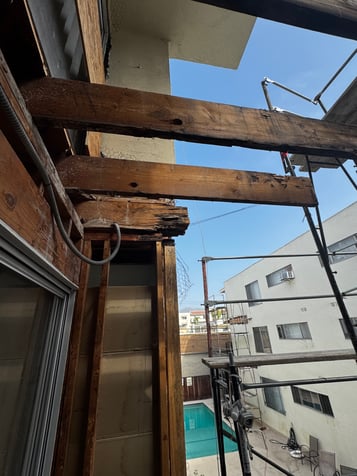
More than 6 feet above adjacent grade (ground level)
Designed for human occupancy or use
Supported in whole or substantial part by wood or wood-based products
Balconies
Decks and porches
Stairways and landings
Walkways and breezeways
Entry structures
Railings and guardrails
Associated waterproofing systems (flashings, membranes, coatings, sealants)
Load-bearing components (joists, beams, ledger boards, connectors, fasteners)
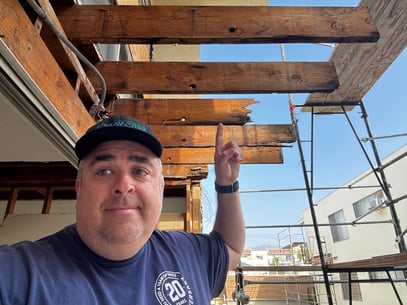
Inspectors evaluate both visible surfaces and concealed structural components for signs of deterioration, including:
Wood decay (dry rot): the #1 cause of balcony structural failure
Water intrusion: evidence that moisture is penetrating waterproofing systems
Fungal growth: visible mold, mildew, or mushrooms
Rust and corrosion: on metal fasteners, connectors, and railings
Cracking or delamination: of surface coatings and waterproofing membranes
Structural movement: sagging, deflection, or instability
Improper drainage: standing water, blocked drains, negative slope
Missing or deteriorated flashing: at wall-to-deck connections
SB 721 inspections must be performed by one of the following licensed professionals:
| 🚨 Conflict of Interest Rule |
|
The inspector cannot be a current employee of the local jurisdiction and cannot be the same person or entity that performs any necessary repairs. This separation ensures objectivity. You will need a separate inspector and a separate repair contractor. |
Inspectors must examine a minimum of 15% of each type of exterior elevated element on the property. For example:
The inspector selects which elements to examine, typically choosing a representative sample across different exposures (north vs. south facing), ages, floor levels, and visible conditions.
The inspector must provide a written, stamped, and signed report to the building owner within 45 days of completing the inspection. The report must include:
Property owners must retain inspection reports for a minimum of two inspection cycles (12 years) and make them available to local jurisdictional officials upon request.
| Milestone | Date | Details |
| SB 721 Signed Into Law | September 17, 2018 | Governor Jerry Brown signed the bill |
| Law Took Effect | January 1, 2019 | Compliance requirements began |
| Original Inspection Deadline | January 1, 2025 | Initial deadline for first inspections |
| AB 2579 Signed | September 2024 | Extended deadline by one year for apartments |
| Final Inspection Deadline | January 1, 2026 | THIS DEADLINE HAS PASSED! Non-compliant properties now face daily fines |
| Next Inspection Cycle | Every 6 years | Properties that completed initial inspection by deadline are next due by 2032 |
| 🚨 If You Haven’t Completed Your Inspection Yet |
|
The January 1, 2026 deadline has passed. If your building has not yet completed its SB 721 inspection, you are now in non-compliance and may be accumulating daily fines of $100–$500. Don’t wait for an enforcement notice! Schedule your inspection immediately and begin the repair process. The longer you delay, the higher the fines and the greater your legal exposure. |
New construction (after Jan 1, 2019): Must be inspected within 6 years of the certificate of occupancy — not subject to the January 1, 2026 deadline.
Early inspection credit: Properties inspected within 3 years prior to January 1, 2019 were not required to have a new inspection until January 1, 2026. That grace period has now expired.
Condo conversions: Any building being converted from apartments to condominiums must complete the inspection before the first close of escrow.
Step 1: Hire a Qualified Inspector
Select a licensed architect, engineer, or qualified contractor (A/B/C-5 license, 5+ years experience). Verify their California license is active and confirm they have no affiliation with any repair contractor. We recommend hiring a structural engineering firm for the most thorough results.
Step 2: Coordinate Access & Schedule
The inspector needs access to individual units if balconies are accessed from inside apartments. Work with your property manager to notify tenants and schedule access windows. SB 721 authorizes landlords to enter dwelling units for the purpose of complying with inspection requirements.
Step 3: Visual Inspection of 15% Sample
The inspector performs a detailed visual examination of at least 15% of each EEE type, assessing decking material, rail connections, framing, fasteners, flashings, surface coatings, and evidence of water intrusion. This typically takes 2–8 hours depending on property size.
Step 4: Exploratory Openings & Testing (If Needed)
If the visual inspection reveals suspected concealed damage, the inspector may create exploratory openings — small cuts in surface materials to examine hidden framing. They may also use moisture meters, borescopes, or infrared imaging to detect water intrusion.
Step 5: Receive the Inspection Report
The inspector delivers a written, stamped, and signed report within 45 days. The report classifies each element as passing, needing non-emergency repairs (NERR), or needing emergency repairs (ERR). This report is your roadmap for what comes next.
Step 6: Take Action Based on Results
If all elements pass — retain records and prepare for the next 6-year cycle. If repairs are needed, hire a licensed repair contractor (separate from the inspector) and follow the timelines outlined in the next section.
Your inspection report will produce one of three outcomes for each inspected element:
The element is in satisfactory condition. The inspector may still provide maintenance recommendations. Retain the report for 12 years and schedule your next inspection within 6 years.
The element has deficiencies that require repair but does not pose an immediate safety threat. This is the most common failed inspection outcome:
The element poses an immediate safety hazard. This requires urgent action:
| 🚨 Critical: Don’t Delay on Emergency Repairs |
|
If your inspection reveals an ERR finding, the inspector is legally required to notify local code enforcement within 15 days. Failure to act exposes you to significant legal liability, especially if an injury occurs. Contact a licensed contractor immediately. |
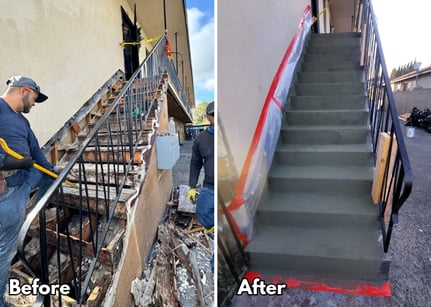
This is where most property owners feel the real impact of SB 721. Understanding what repairs cost, and how to
budget for them. This is critical, especially for large multifamily properties.
| Repair Type | Typical Cost Per Unit | What's Involved |
| Waterproofing & Resurfacing | $1,500 – $5,000 | New waterproofing membrane, surface coating, drainage improvements |
| Railing Repair/Replacement | $1,000 – $4,000 | Guardrail replacement, post anchoring, code-compliant upgrades |
| Structural Framing Repair | $3,000 – $15,000+ | Joist replacement, ledger board repair, dry rot remediation, sistering |
| Flashing Replacement | $500 – $2,500 | Wall-to-deck flashing, through-wall flashing, drip edges |
| Full Balcony Rebuild | $10,000 – $30,000+ | Complete demolition and reconstruction |
| 💡Pro Tip: Phase Your Repairs to Manage Costs |
|
When you repair balconies voluntarily (before or alongside the formal inspection), you are not required to complete all repairs simultaneously. You can work with your contractor to separate the property into phases to address the most critical balconies first and budgeting the rest over several months. This is significantly easier on cash flow than emergency-mandated repairs on a 30–120 day clock. |
With the January 1, 2026 deadline now past, penalties are no longer theoretical but are actively enforceable.
Here’s what non-compliant property owners face:
| 🚨 The Real Cost of Continued Delay |
|
Every day without compliance adds to your fine total and deepens your legal exposure. Beyond fines, deferred maintenance always costs more than proactive repair. Water damage that could have been fixed with a $3,000 waterproofing job can escalate to a $25,000+ full rebuild if left unaddressed. If you haven’t started the process yet, the most important step is scheduling your inspection right away, and lining up a repair contractor so you can move quickly once you have your report. |
California has two separate balcony inspection laws that are often confused. Here’s a side-by-side comparison:
| Factor | SB 721 (Apartments) | SB 326 (Condos/HOAs) |
| Applies To | Apartment buildings with 3+ units | Condominiums and Common Interest Developments |
| Responsible Party | Building owner | HOA board |
| First Deadline | January 1, 2026 (PASSED) | January 1, 2025 (PASSED) |
| Inspection Frequency | Every 6 years | Every 9 years |
| Who Can Inspect | Architects, engineers, contractors (A/B/C-5, 5+ yrs), certified building inspectors | Licensed architects, structural engineers, or civil engineers only |
| Sampling | Minimum 15% of each EEE type | Statistically significant sample (95% confidence, ±5%) |
| Non-Emergency Repairs | Permit within 120 days; repairs within 120 days of permit | No specified statutory timeline |
| Emergency Repairs | Report within 15 days; begin repairs within 15–30 days | Immediate preventive measures; restrict access |
| Health & Safety Code | Section 17973 | Civil Code Section 5551 |
Most SB 721 resources focus on the inspection. But what happens after you receive your report is where property owners actually need help. That’s exactly where Bay Cities comes in.
Bay Cities Construction is a licensed general contractor (License #842614) with over 30 years of experience in Southern California. We specialize in the repair and restoration work that follows your SB 721 inspection:
We do not perform SB 721 or SB 326 inspections or certifications. California law requires that the inspector and the repair contractor be separate entities. We strongly recommend hiring a licensed structural engineering firm for your formal inspection.
However, we can perform a pre-inspection visual assessment of your balconies to help you identify potential issues and budget for repairs. This proactive approach can save significant money and stress.
Bay Cities Construction serves multifamily property owners throughout Los Angeles County and Orange County, including Los Angeles, Long Beach, Santa Monica, Pasadena, Anaheim, Irvine, Huntington Beach, and surrounding cities.
1 min read
In Southern California, balcony waterproofing fails faster than almost anywhere else in the country. The combination of intense UV exposure, coastal...
1 min read
Why We Created Ultimate AI-Powered Balcony Repair & Waterproofing Chat {% video_player "embed_player" overrideable=False, type='hsvideo2',...
1 min read
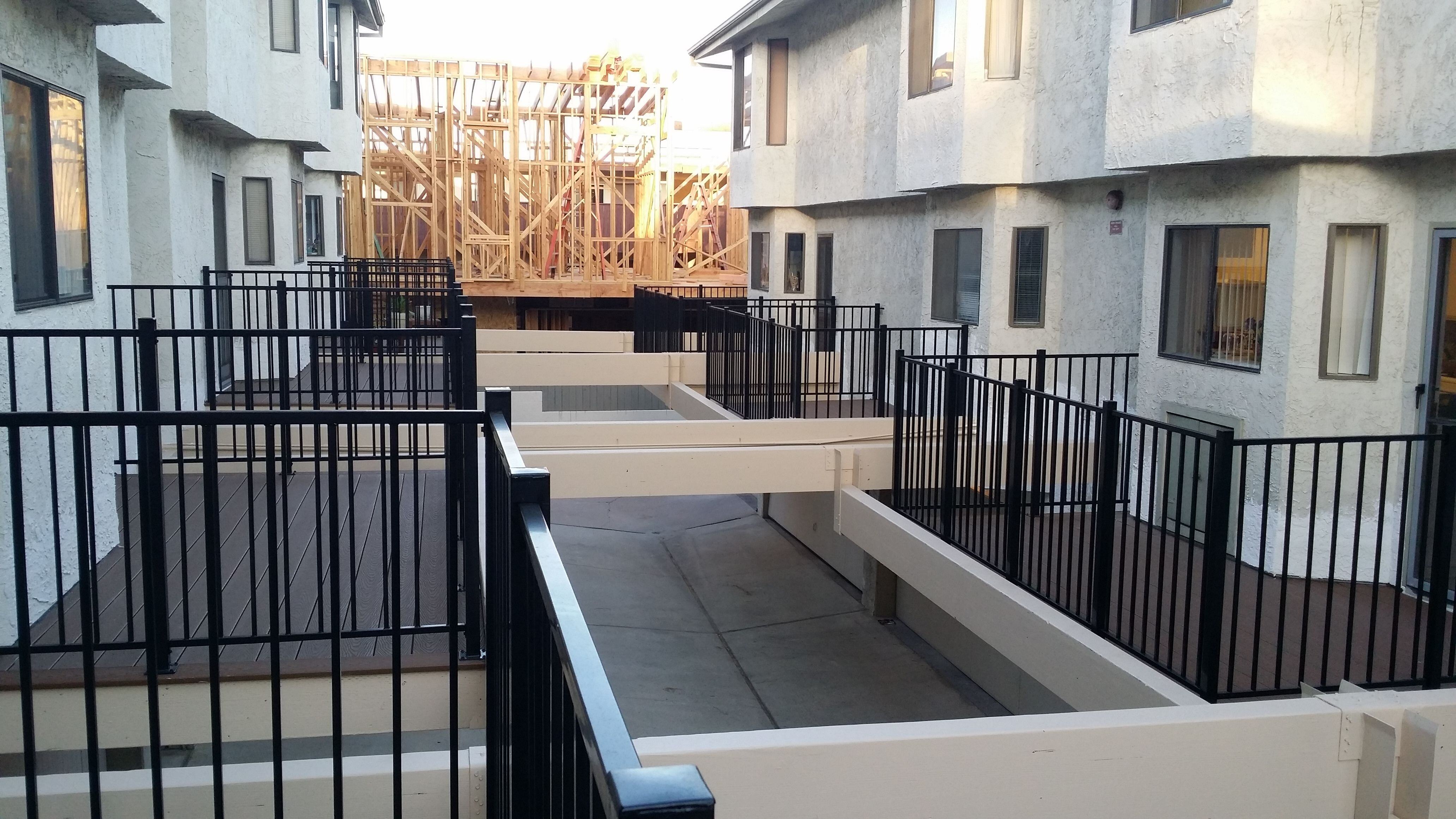
What is the current SB 326 Balcony Inspection Deadline for California HOAs? The mandatory initial inspection deadline for most California HOAs under...