1 min read
SB 721 California Law: The Total Guide to Balcony Inspection & Repair [2026 Update]
🚨 The SB 721 Deadline Has Passed The January 1, 2026 compliance deadline for SB 721 inspections has come and gone. If your multifamily...
16 min read
In Southern California, balcony waterproofing fails faster than almost anywhere else in the country. The combination of intense UV exposure, coastal salt air, thermal cycling, and the occasional El Niño rain season creates conditions that wear down membranes, corrode fasteners, and crack concrete in ways that most waterproofing systems aren't designed to handle indefinitely. And because the damage develops beneath the surface; inside the framing, behind the stucco, and under the deck coating. When it makes itself visible, is when it becomes expensive!
At Bay Cities Construction, we've been inspecting, repairing, and waterproofing balconies across Los Angeles and Orange County for over 20 years. In that time, we've seen the same patterns repeat: a hairline crack ignored for a season, a drain that pools after every rain, a railing post that was never properly sealed when it was installed. Small things that compound quietly until the repair scope, which increases the cost far larger than it needed to be.
This article is built around what we've learned from those jobs.
|
|
The most important thing to understand about balcony water damage: It's always cheaper to address early. A $1,500 waterproofing repair today can prevent a $30,000+ structural repair two or three years from now. The signs are almost always visible well before the damage becomes serious. Here's what to look for → |
Most property owners assume balcony waterproofing means applying a sealant or coating to the deck surface. In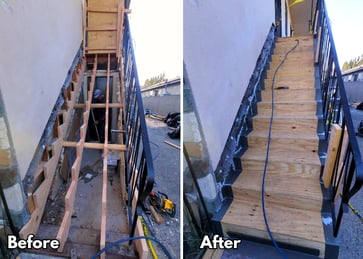 reality, it's a multi-layer engineered system and the surface coating is just the last step. What's underneath it is what actually keeps water out of your structure. When contractors skip steps or use the wrong system for the substrate, the surface can look perfectly fine while water is actively working its way into the framing below.
A properly installed balcony waterproofing system includes:
When any one of these components fails (and they all have finite lifespans) water finds a path. In our experience, flashing failures at wall-to-deck transitions and unsealed railing post penetrations are the two most common entry points we find on Southern California balconies. Neither is visible from the surface until the damage underneath is already significant.
Balcony deterioration leaves visible signs well before structural damage becomes serious, but most property owners don't know what to look for until a problem is already advanced. After inspecting thousands of balconies across LA and Orange County, these are the warning signs we see most consistently, organized by urgency.
| 💧Water Stains or Damp Spots Below the Balcony | 🔍 Cracks in the Concrete or Deck Surface | 🪵 Soft, Spongy, or Discolored Wood |
| If you see water stains, peeling paint, or moisture on the ceiling of the room directly below your balcony, water is already breaching the waterproofing layer. This is an urgent sign requiring immediate inspection. | Hairline cracks are the entry point for every catastrophic balcony failure. Water enters, freezes (in cooler months), expands, and widens the crack. In Southern California, UV exposure and thermal cycling do the same work more slowly but just as surely. | Press on any wood components- decking, fascia, ledger boards. If they feel soft, spongy, or show discoloration, dry rot has begun. Wood rot compromises structural integrity and spreads rapidly once established. |
| 🦀 Rusted Railings, Fasteners, or Reinforcement | 🌊 Standing Water or Poor Drainage | 🎨 Bubbling, Peeling, or Flaking Deck Coating |
| Rust stains streaking down from railing posts or fasteners indicate water infiltration at penetration points. This is one of the most common failure locations. Rusted steel rebar inside concrete will eventually cause spalling (concrete chunks breaking off). | Water should drain completely from a balcony within minutes of rain stopping. If puddles persist for hours or the deck slope appears flat or reversed, the drainage system is compromised and water is finding ways into the structure. | When a deck coating bubbles or peels, moisture has already gotten underneath the membrane and is trying to escape. This means the waterproofing barrier has been breached and must be replaced, not patched. |
| 🔲 Loose, Cracked, or Hollow-Sounding Tiles | 🟢 Mold, Mildew, or Algae Growth | 🚪Difficulty Opening or Closing Balcony Doors |
| Tap tiles with a coin or knuckle. A hollow sound ("drummy" tiles) means the adhesive bond has failed, typically due to moisture intrusion below. Cracked or loose grout joints are direct water entry points. | Persistent mold on balcony surfaces, especially in corners, along walls, or near drainage points signals chronic moisture retention. Beyond aesthetics, mold indicates the environment is consistently damp enough to sustain biological growth. | Swollen or difficult-to-operate balcony doors are a subtle but telling sign. Door frames and sills swell when exposed to chronic moisture, indicating water is reaching the structural components around the threshold, a critical waterproofing failure zone. |
| ⚠️ Concrete Spalling or Exposed Rebar | ||
| Spalling (where chunks of concrete surface flake or pop off) is a serious structural warning. If you can see rust-orange rebar beneath the surface, the steel reinforcement is actively corroding. This is an urgent structural safety issue. |
| ⚠ Urgent |
|
If you observe exposed rebar, sagging balcony sections, wobbly railings, or active water leaking into living spaces below, restrict access to the balcony immediately and schedule a professional structural inspection within days, not weeks. Do not delay! |
Free Consultation · Los Angeles & Orange County
Think Your Balcony Needs Repair?
Start with a free zoom consultation. Share photos of your balcony and we'll tell you what we're seeing, whether it looks like a contractor situation, what the likely scope is, and what the next step should be. If an on-site visit makes sense, we'll schedule that to assess the damage in detail and prepare your quote.
SCHEDULE A FREE CONSULTATION →Identifying the root cause of a balcony leak is the most important step before any repair is attempted. Addressing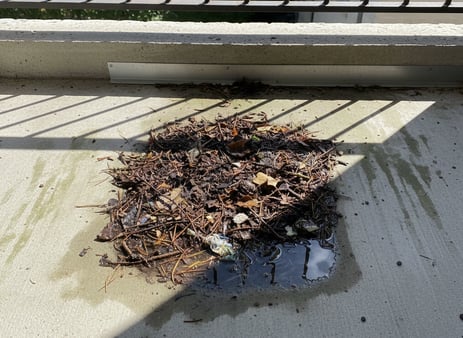 surface symptoms without diagnosing the underlying problem is the most common reason balcony repairs fail, and why leaks return within months of work being completed.
In our experience, the following causes account for the vast majority of leaking balconies we inspect in Southern California.
Standard polyurethane and acrylic waterproofing coatings have a functional lifespan of 5–8 years outdoors under normal conditions. In Southern California, intense UV exposure, thermal cycling, and occasional heavy rain events (especially during El Niño seasons) can shorten this to 3–5 years. Once the membrane reaches end of life, it becomes brittle, cracks, and loses its adhesion thus allowing water to penetrate.
Building codes require balconies to slope a minimum of 1/4 inch per foot toward drains. Balconies that are flat or worse, sloped back toward the building and allow water to pool. Pooling water finds every microscopic crack, joint, and penetration point. This is especially common in older construction and in balconies that have been resurfaced without correcting the slope.
The most water-vulnerable points on any balcony are the transitions: where the deck meets the building wall, around the door threshold sill, and at every post or railing base penetration. Flashing which is specialized metal, or membrane strips the seal these joints corrodes, separates, or was never properly installed in the first place. Failed flashing accounts for a significant percentage of balcony leaks.
Every hole drilled through a balcony to anchor a railing post is a potential water entry point. When these penetrations aren't sealed with waterproof membrane and sealant around the post base (or when the original sealant ages and shrinks) water enters directly into the structural framing below. This is particularly destructive on wood-framed balconies.
Buildings move. Over time, structural settlement, thermal expansion and contraction, and seismic activity (especially relevant in Southern California) cause micro-movement in balcony structures. Rigid waterproofing systems that can't accommodate this movement will crack at stress points, creating leak pathways.
A clogged balcony drain turns what should be a managed water drainage system into a pond. Debris such as leaves, dirt, and construction material compacts in drains, causing water to back up and find alternative exit routes through the structure.
The most preventable cause of all. Small cracks, worn sealant joints, and minor membrane damage (all of which cost hundreds to address) become structural failures when ignored for years. Water damage is exponential: a $500 problem ignored for two years can become a $25,000 repair.
The waterproofing system that's right for your balcony depends on the substrate, the extent of existing damage, traffic levels, and budget. There is no single "best" product, and contractors who recommend one system for every job regardless of conditions are a red flag 🚩
Here are the primary systems we use in Southern California and the situations each one is suited for.
| 01 Liquid-Applied Membrane (Polyurethane or Acrylic) | 02 AMAC Fiberglass-Reinforced System | |
| A flexible, rubber-like liquid that is rolled or sprayed onto the prepared surface, forming a seamless, waterproof skin. Liquid membranes are excellent at conforming to irregular surfaces and sealing around details. They are cost-effective for smaller areas and re-application maintenance. Best For: Concrete balconies, Minor repairs, Maintenance re-coating |
The AMAC (Acrylic Mortar with Acrylic Coating) system uses metal lath reinforced with fiberglass mesh, providing superior strength and flexibility. This is the preferred system for full balcony replacement in Southern California and is used by Bay Cities Construction on most major repairs. It accommodates structural movement without cracking. Best For: Full replacements, High-traffic balconies, Wood-framed structures |
|
| 03 Sheet or Roll Membrane (Modified Bitumen, PVC, or Self-Adhesive) | 04 Cementitious (Crystalline) Waterproofing | |
| Pre-formed sheets of waterproof material; typically bitumen, PVC, or elastomeric adhered to the balcony substrate. Sheet membranes provide a highly uniform, even waterproof layer and are excellent for large, flat areas. Self-adhesive versions (like Polyguard's Balconyguard™) are increasingly popular for new construction. Best For: New construction, Large flat decks, Multi-family projects |
A cement-based coating that chemically reacts with concrete to form waterproof crystals within the concrete matrix itself. Unlike surface membranes, crystalline waterproofing becomes part of the concrete. It self-heals minor cracks and is highly durable. However, it is not suitable for wood substrates. Best For: Concrete balconies, Humid climates, Long-term protection |
|
| 05 Epoxy and Urethane Coatings | 06 FM (Fiberglass Mat) System | |
| High-performance coatings that provide both waterproofing and extreme surface durability. Epoxy systems are rigid and ideal for high-traffic commercial applications. Urethane systems are more flexible and better suited to balconies that experience temperature variation and movement. Best For: Commercial properties, High-traffic areas, Decorative finishes |
An all-acrylic waterproof system using fiberglass mat reinforcement. More affordable than the AMAC system, warranted for up to 5 years. Appropriate for low-to-moderate pedestrian traffic where the subfloor is in good condition. A practical choice for maintenance-level repairs on sound structures. Best For: Budget repairs, Low-traffic residential balconies, Sound subfloors |
| ‼ Important Note |
|
The right waterproofing system for your balcony cannot be determined without a professional assessment of your specific substrate, existing damage, drainage conditions, and structural situation. Two balconies in the same building can require completely different solutions. |
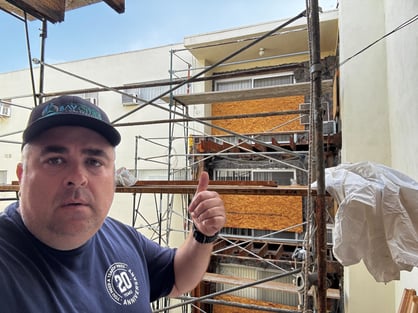 Expect
A properly executed balcony repair follows a specific sequence of steps, and skipping or rushing any one of them is the leading cause of waterproofing failure we see on jobs that were previously "repaired" by another contractor.
Here is exactly how Bay Cities Construction approaches a full balcony repair and waterproofing project, from the first call to the final sign-off.
We start with preliminary zoom consultation at no charge to determine is a licensed contractor is the right fit based on discussion and photos of your project, then we come out for a visual inspection to evaluate the scope of the problem and what the project likely involves. Not every crack requires a full rebuild, and we'll tell you that honestly.
A thorough inspection using moisture meters, thermal imaging (where appropriate), and physical probing to detect hidden rot, compromised framing, failed flashing, and the true extent of water damage. If structural engineering review is required (per SB 326 or SB 721), we coordinate that process. This step reveals what surface inspection alone cannot.
Based on findings, we produce a detailed scope of work with transparent cost breakdown which covers materials, labor, permits, and engineering if required. We present best-case and worst-case scenarios so you aren't surprised if additional hidden damage is discovered during demolition.
All significant balcony structural work in Los Angeles and Orange County requires building permits. We handle permit applications, coordinate with city inspectors, and ensure your project is fully code-compliant. Unpermitted balcony work creates serious liability and insurance problems.
We remove existing deck surfaces, failed membranes, rotted wood, and any compromised concrete. This is the critical reveal stage where hidden damage is fully exposed and the true scope is confirmed. Debris is removed from the site.
Rotted framing members are replaced with pressure-treated lumber. Concrete is repaired with epoxy injection or cementitious patching. Metal components are treated or replaced. Flashing is installed at all critical transitions. The structural substrate must be sound before waterproofing can begin.
The selected waterproofing system (AMAC, liquid membrane, sheet membrane, etc.) is applied to the prepared substrate per manufacturer specifications. This includes proper slope creation, membrane installation, flashing integration at all edges and penetrations, and drainage verification. Each layer is allowed proper cure time because rushing this stage is what causes premature failure.
The selected finish ie. texture coat, tile, composite decking, or other surface material is installed over the completed waterproofing system. Railings and all other components are reinstalled, sealed at all penetrations.
The completed balcony is water-tested (flood test) to verify waterproofing integrity before the project is signed off. City inspection is completed. Warranty documentation is provided. We stand behind our work with a written warranty 5 year warranty.
Balcony repair costs vary significantly depending on the type and extent of damage, the balcony's size and substrate, whether structural framing is involved, and local permit requirements. The figures below reflect real project pricing in Los Angeles and Orange County as of 2025 (these are not national averages, which tend to significantly underestimate what work costs in this market). For a scenario-by-scenario breakdown of what drives these numbers, see our Balcony Waterproofing Cost Breakdown.
| REPAIR TYPE | TYPICAL COST RANGE | WHAT'S INCLUDED | TIMELINE |
| Minor Repairs (cracks, sealant, drain clearing) |
$500 – $2,000 | Crack injection or patching, sealant replacement, drain clearing, minor surface coating touch-up | 1–2 days |
| Waterproofing Re-Coat (membrane replacement, surface intact) |
$3,000 – $8,000 | Existing coating removal, surface prep, new membrane system, topcoat. Assumes sound subfloor and framing. | 3–5 days |
| Moderate Repair & Waterproofing (our most common project) |
$8,500 – $15,000 | Full demolition of deck surface, partial framing repairs, complete waterproofing system, new deck surface. ~111 sq ft average balcony. | 1–2 weeks |
| Extensive Repair (significant water damage, framing involved) |
$15,000 – $35,000 | Extensive demolition, significant framing replacement, full waterproofing system, permitting, possible engineering review. Multiple balconies or large square footage. | 2–4 weeks |
| Full Structural Rebuild (worst-case, structural failure) |
$40,000 – $50,000+ | Complete balcony removal and reconstruction. Structural engineering design required. Permits, inspections, all-new framing, waterproofing, and finish work. | 4–8 weeks |
|
The most common project handle is a moderate repair and waterproofing replacement on an average ~111 sq ft balcony in Southern California which typically runs $8,500 to $11,500. That number increases significantly if structural framing is involved, and decreases when damage is caught early. Free Estimating Tool Not Sure What Your Repair Might Cost? Use our Balcony Repair Cost Calculator to get an estimate based on your balcony's size, condition, and the number of balconies involved. It won't replace an on-site assessment. Actual costs depend on what's found during inspection, but this gives you a clear starting point before you call. Try the Cost Calculator → |
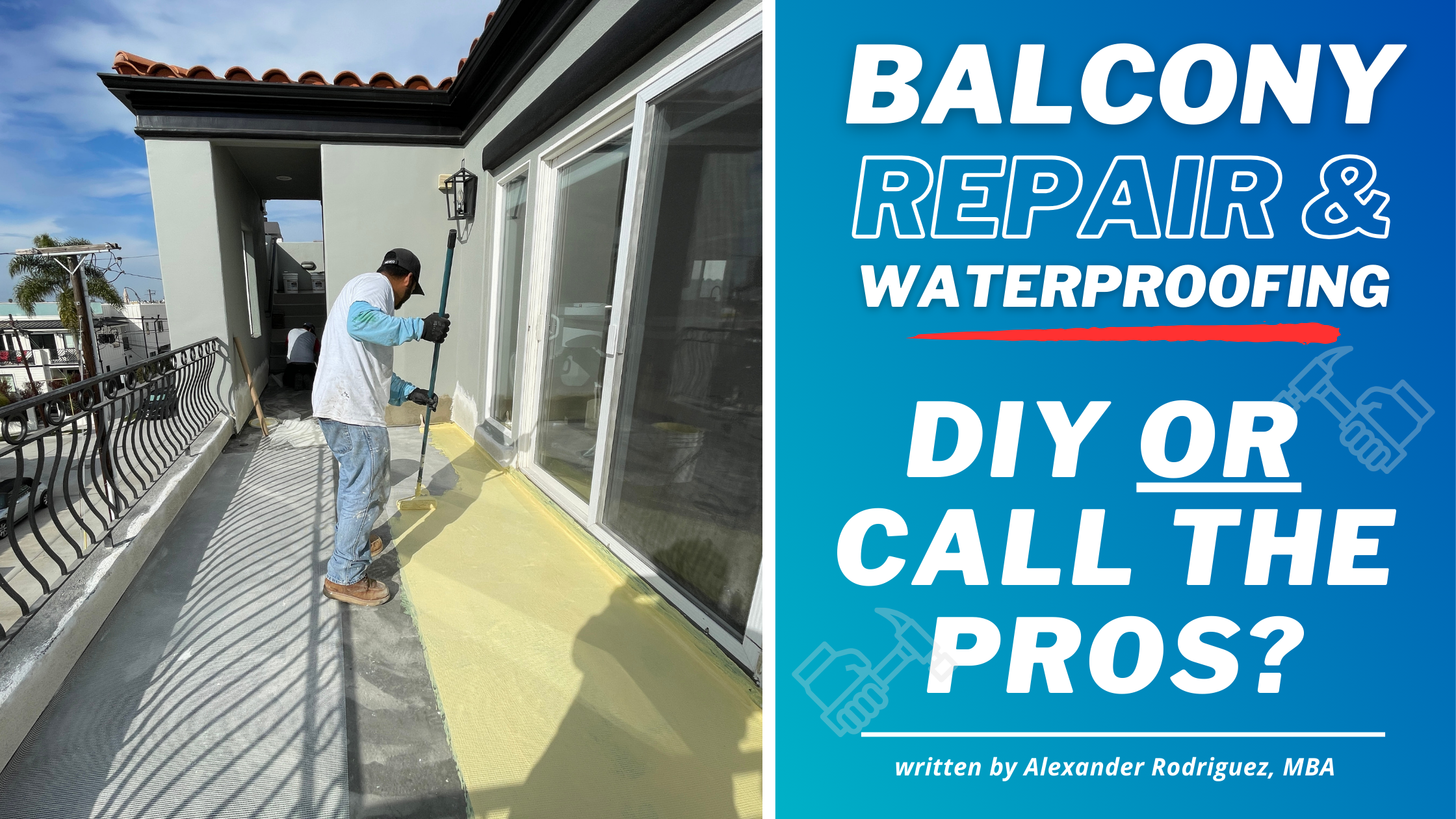
Some minor maintenance tasks are appropriate for property owners to handle themselves, but balcony waterproofing is not one of them.
Here is where the line is, and why it matters.
Hidden damage: What is visible on a balcony surface is rarely the full extent of the problem. It is common to open a balcony that appears to have only cosmetic damage and find framing that is severely compromised by dry rot. Without the proper tools and experience, it is not possible to accurately assess what is happening beneath the surface.
The chain reaction problem: Improper waterproofing like using the wrong product, poor application, missing flashing not only fails to solve the problem, but it can make things significantly worse by trapping moisture that previously had exit routes. Applying a surface sealer over a leaking balcony is one of the most common mistakes we see, and it consistently results in accelerated damage.
Code compliance: Structural balcony repairs require building permits in California. Unpermitted work creates complications when selling a property, can void homeowner's insurance coverage for related claims, and creates liability exposure if an injury occurs. For multifamily properties subject to SB 326 and SB 721, licensed contractors and engineering sign-off are legally required.
Safety: A balcony that has been improperly repaired can appear structurally sound while being significantly compromised underneath. Balconies with concealed wood rot or corroded connections are the most dangerous precisely because the problem isn't visible.
| ‼ Important Note |
|
Spray-on and brush-on waterproofing products marketed as DIY leak fixes are not a solution if tiles are loose, water is pooling, or the membrane has already failed. These products seal moisture in rather than allowing it to escape, which accelerates deterioration of the underlying structure. |
California has two state laws governing balcony inspections and repairs on multifamily properties. Both compliance deadlines have now passed.
Here is what property owners and HOA boards need to understand about each law.
Who it applies to: Multi-family residential buildings (3+ units) with exterior elevated elements (balconies, decks, walkways, stairways) that are wood or wood-based framed and more than 6 feet above ground.
Requirements: Initial inspection by a licensed professional (architect, civil/structural engineer, or licensed contractor with specific qualifications) by January 1, 2025, with subsequent inspections every 6 years. Inspectors must follow specified inspection standards and submit reports. Unsafe conditions must be repaired before residents can use the structure. For a full breakdown of requirements, deadlines, and penalties, see our complete SB 721 guide.
Who it applies to: Common interest developments (HOAs, condominiums) with exterior elevated elements.
Requirements: Inspection by a licensed structural engineer or architect by January 1, 2025, then every 9 years. More stringent than SB 721, requires a licensed structural engineer or architect (not general contractors) to perform or oversee inspections. Inspectors must examine a statistical sample of balconies using visual inspection and non-destructive testing methods.
Bay Cities Construction works directly with licensed structural engineers and architects to coordinate the repair work that follows SB 326 and SB 721 inspections. We have helped hundreds of property owners and HOA boards navigate the process from inspection report to completed repairs. If you're unsure where your property stands, contact us for a preliminary consultation.
The most expensive balcony repairs we do are almost always the result of deferred maintenance, small issues that were visible for years before they became structural.
These habits won't replace professional inspections, but they will catch problems early and significantly extend the life of your waterproofing system.
| ⚫️ | Inspect annually | Walk your balconies in spring and fall, looking for cracks, bubbling coatings, discolored grout, and water stains below. Take photos to track changes. |
| ⚫️ | Clear drains monthly | Keep drains and drainage channels free of debris, leaves, and sediment. A clogged drain is one of the most preventable causes of balcony water damage. |
| ⚫️ | Verify drainage after rain | After significant rainfall, check that water drains completely within 30 minutes. Persistent puddles indicate a drainage or slope problem. |
| ⚫️ | Maintain caulk and sealant joints | Inspect sealant around door thresholds, railing bases, and wall transitions annually. Re-caulk any joints showing cracking, shrinkage, or separation. |
| ⚫️ | Don't ignore discoloration | Any new water stain, rust streak, or discoloration on or below a balcony deserves immediate investigation, not "wait and see." |
| ⚫️ | Schedule professional inspection every 3–5 years | Even if no visible damage is apparent, a professional eye can identify developing issues before they become expensive problems. Required sooner under SB 326/721. |
| ⚫️ | Check waterproofing warranty status | Know when your balcony's waterproofing was last applied and what its expected service life is. Plan for re-coating before failure, not after. |
| ⚫️ | Avoid heavy planters directly on deck surfaces | Heavy containers trap moisture against deck surfaces, accelerating wear. Use elevated plant stands with drainage clearance. |
Free Estimating Tool
Want a faster ballpark before calling?
Our Balcony Repair Cost Calculator estimates costs based on your inputs; balcony size, condition, and number of balconies. It's a starting point, not a quote. Real pricing requires a site visit, but this gets you in the right range.
Use the Cost Calculator →
Below are the questions we receive most frequently from property owners, HOA boards, and property managers about balcony repair and waterproofing in Southern California.
![SB 721 California Law: The Total Guide to Balcony Inspection & Repair [2026 Update]](https://www.baycitiesconstruction.com/hubfs/Gallery%20-%20Grassl%20-%20San%20Pedro%20-%20Walkway%20Repair/12%20walkway%20surface%20before%20after.png)
1 min read
🚨 The SB 721 Deadline Has Passed The January 1, 2026 compliance deadline for SB 721 inspections has come and gone. If your multifamily...
1 min read
Why We Created Ultimate AI-Powered Balcony Repair & Waterproofing Chat {% video_player "embed_player" overrideable=False, type='hsvideo2',...
1 min read
Picture this: a warm cup of coffee in hand, the gentle morning sun kissing your face as you take in the breathtaking cityscape from your balcony. Or...