1 min read
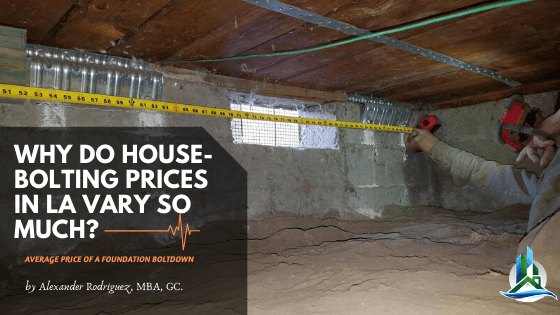
Why Do House Bolting Prices in Los Angeles Vary So Much?
I don’t want to scare you, but did you know that there are over 140 faults in Southern California? According to the Southern California Earthquake...
18 min read
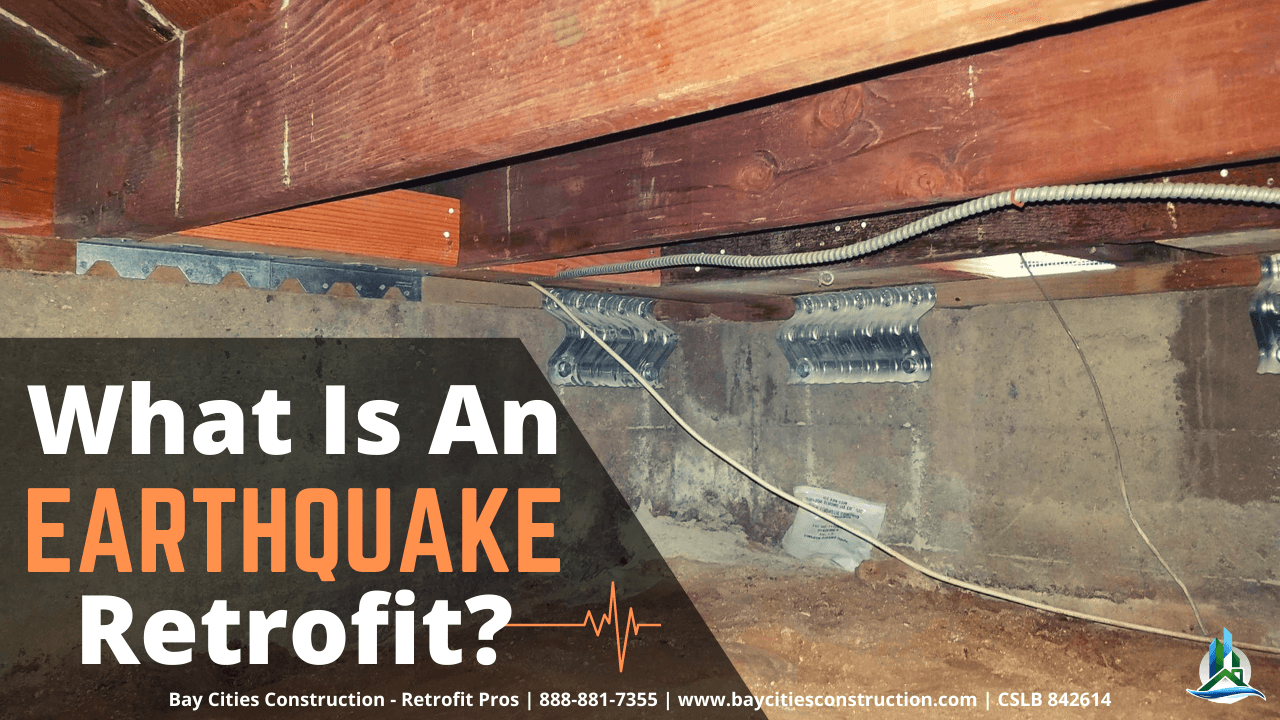
Ever since the Ridgecrest Earthquakes struck in July 2019, several friends and customers of mine have asked for my construction advice - they all want to know how to protect their homes from earthquakes. If your home was built before the 1970's and has a raised foundation, bolting down your foundation can help protect your home from earthquakes.
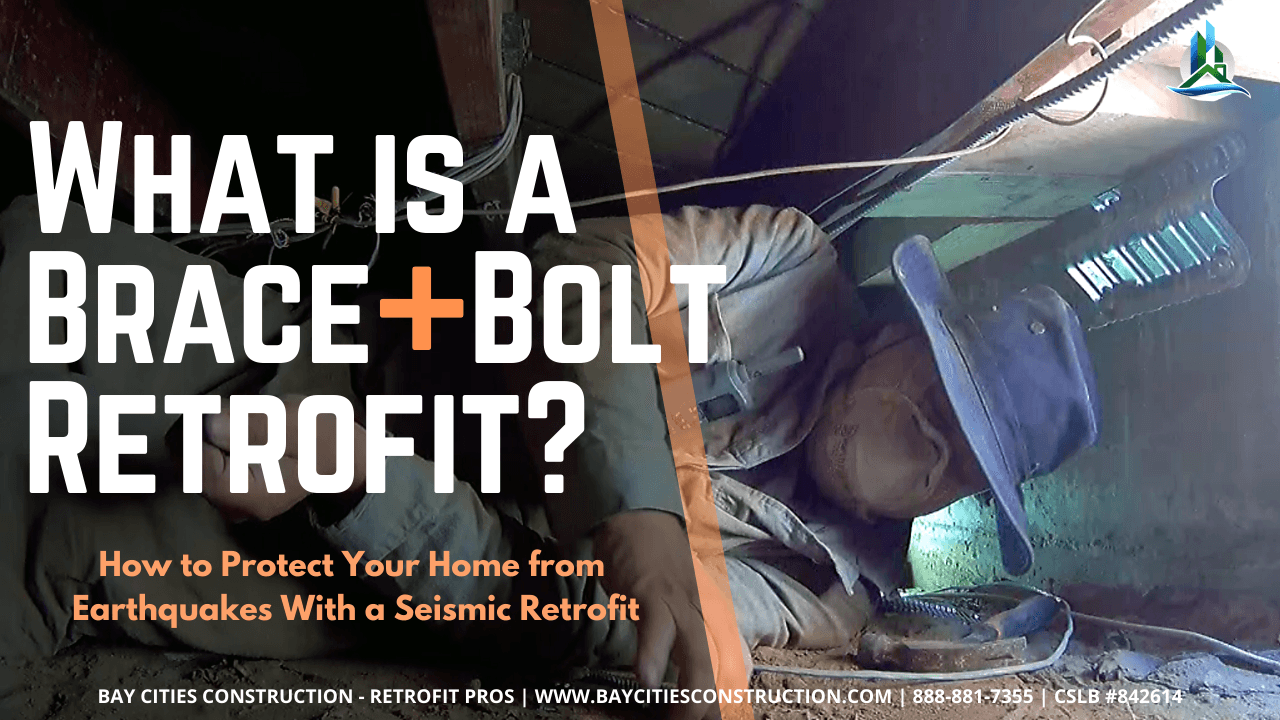
An earthquake retrofit is a seismic retrofit, it's also known as a "brace+bolt retrofit", "house retrofit", "foundation bolting", "foundation retrofit", and simply a "boltdown". It is the process of improving the connection between the wood-frame and the concrete foundation of a house.
When it comes to holding your home firmly in place during an earthquake, not all bolts are created equal. Over the years, builders and retrofitters have relied on a couple of main bolt types; each suited to different ages and conditions of your foundation.
Expansion bolts or often called mechanical anchor bolts, are the good ol' workhorses in the world of foundation retrofitting. Picture them as sturdy wedges that expand within the concrete when tightened, anchoring the wood-frame securely to the foundation. They’re most effective when your concrete is in good shape (think newer homes or solid, well-cured older foundations).
A few quick facts about expansion bolts:
Quick to install: Less fuss, fewer materials.
Cost-effective: Usually a more budget-friendly option.
Best for strong concrete: If your foundation hasn’t seen too many decades, these are likely the go-to choice.
However, if the concrete is weak, brittle, or tends to crack, expansion bolts may not do their job as intended.
Expansion foundation bolts are sometimes called mechanical anchor bolts are one of the go-to choices for tying your home’s mudsill to its concrete foundation in a retrofit. So, when are they ideal?
These bolts are best suited for houses with concrete that’s still in solid shape. If your foundation isn’t crumbling, showing major cracks, or otherwise weakened from years of wear, expansion bolts can do the trick. They’re also commonly used in newer foundations, since the concrete tends to be stronger and less brittle.
But, there’s a big “but” here, expansion bolts come with a limitation: they need that concrete to be strong. If the concrete is old, soft, or degraded, these bolts might cause the foundation to crack during installation. In cases like that, a different anchoring system may be required, such as epoxy-set bolts, which are a better match for aging or compromised concrete.
Best for: Homes with newer or well-preserved concrete foundations
Not ideal for: Old, damaged, or weakened concrete (risk of cracking increases)
Takeaway: Always check the condition of your foundation before deciding on expansion bolts, and consider alternatives if the concrete shows significant wear
This is the reason building standards like those from the Association of Bay Area Governments (ABAG), recommend expansion bolts only if installing them won’t crack your foundation. As with anything structural, following the specific manufacturer’s instructions is a must.
Epoxy-set bolts are the retrofit superheroes for homes with aging or less-than-perfect foundations. Instead of relying on force to hold position, these bolts use a high-strength epoxy resin like super glue for concrete. This chemical bond allows the bolt to adhere deep within the foundation and resist not just sideways movement, but also any upward force during an earthquake.
Why choose epoxy-set bolts?
Ideal for older or weaker concrete: They anchor securely even when expansion bolts can’t.
Greater depth: These bolts can be longer and set deeper, perfect if your retrofit includes extra framing or reinforcement.
Superior uplift resistance: They’re especially valuable if your house has additional bracing for cripple walls or is located in a high-seismic area.
Choosing between expansion and epoxy-set bolts depends on your home’s age, the condition of the concrete, and the specific requirements of your seismic retrofit. A careful inspection will help determine which bolt type will give your house the best possible shake-resistance.
If your home was built before modern concrete standards were in effect, there’s a good chance the concrete in your foundation isn’t as robust as what’s poured today. In these cases, epoxy-set foundation bolts can be the preferable choice over traditional mechanical anchor bolts.
Epoxy-set bolts have a few distinct advantages:
Superior Performance in Weaker Concrete: Older, brittle concrete doesn’t always grip mechanical anchor bolts as well as intended. Epoxy helps “glue” the bolt deep into the foundation, creating a much stronger hold which is especially important for the aging concrete found under many LA homes built pre-1979.
Deeper Anchorage: Epoxy allows for longer bolts to be installed, meaning they can reach deeper into the concrete which is incredibly useful if you’re adding extra support, like new blocking between cripple wall studs or additional plywood shear walls for bracing.
Better Resistance to Uplift: During a serious quake, parts of your foundation may actually try to lift upward, putting bolts to the test. Epoxy-set bolts are especially reliable here, they resist being pulled out, providing a sturdier connection when it’s needed most.
If you’re dealing with an older house or adding significant new bracing, epoxy-set foundation bolts offer a safer, more resilient solution that can give your retrofit the extra staying power you want.
If you've been digging into all the options for fortifying your home, you may have come across "angle iron struts" and wondered if they’re worth considering. In plain terms, angle iron struts are sturdy, custom-fabricated metal pieces designed to connect the floor joists of your house directly to the foundation. Imagine them as tough metal braces, tailored to fit your home like adding an extra seatbelt that keeps everything snug during a bumpy ride.
These struts serve two main purposes:
Vertical protection: They help prevent your house from being lifted or tipped during strong shaking.
Lateral strength: They also keep your house from sliding sideways off the foundation.
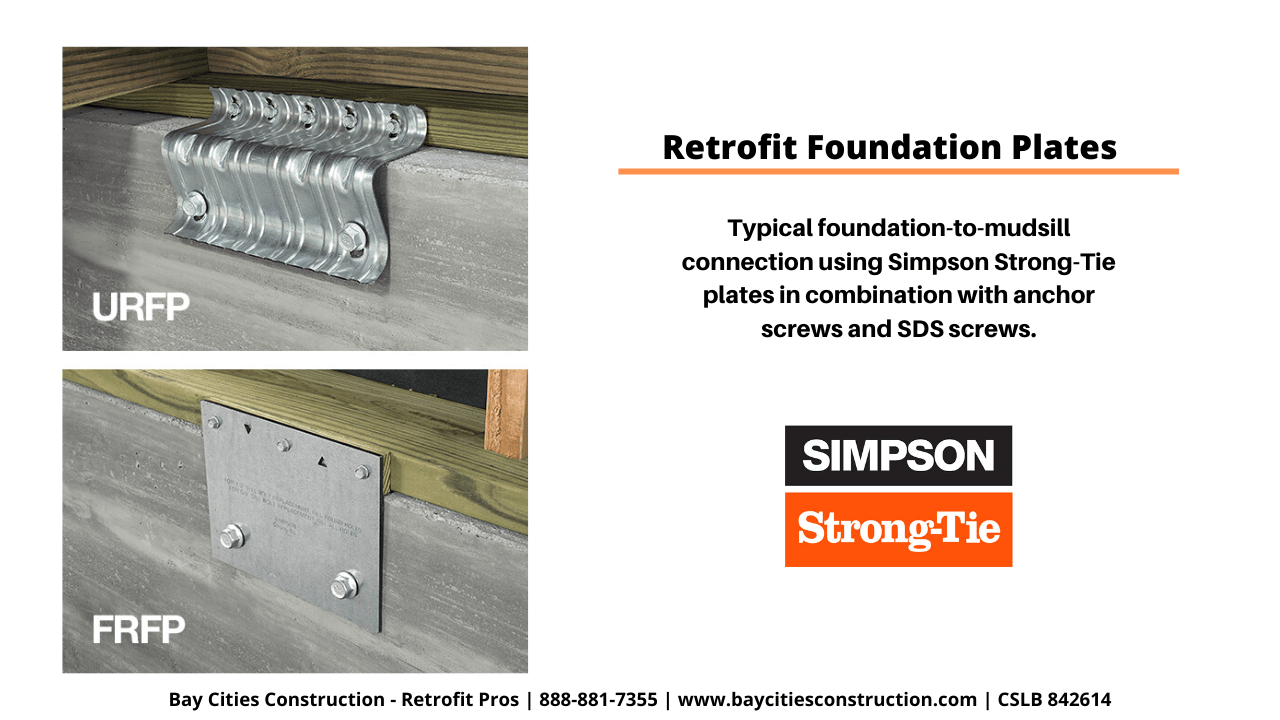
What's especially helpful is that angle iron struts can be installed alongside standard foundation bolts, mudsill plates (like Simpson Strong-Tie products), and shear panels to provide a much stronger connection. Think of it as reinforcing weak links and distributing the forces of an earthquake more evenly across your home’s framework.
If you own a home with a tricky setup, for instance if you have portions built on a hillside, or a mix of cripple walls and direct-to-foundation framing, angle iron struts can help bridge the gaps. They extend the reach of the foundation anchors into the main floor framing and compensate for any old or insufficient bolts.
Ultimately, combining these custom struts with other retrofit measures makes your home more resilient, especially if it was built before more rigorous building codes kicked in. This layered approach can make all the difference when the ground starts to move.
To strengthen the tie between your home's wood frame and its concrete foundation, retrofit connectors play a crucial role, especially for California homes that predate modern building codes. These metal hardware pieces are designed to grip and anchor the wooden sill plate and floor joists securely to the foundation.
Here's how retrofit connectors are typically used:
Anchor Plates: Metal anchor plates are fastened between the wood framing (like the mudsill) and the concrete foundation. These plates help prevent the house from sliding off its foundation during seismic shaking.
Framing Clips: Additional metal clips connect the mudsill to the rim joist and other framing members, further increasing stability and keeping all parts of the floor system locked together.
Direct Anchorages: For extra reinforcement, specialized anchors can attach the floor joists themselves directly to the concrete foundation, offering another layer of protection against movement.
By combining these connectors in strategic locations; spacing them according to your home's specific size and design, you significantly boost the structure's ability to resist the side-to-side forces generated during an earthquake.
Sometimes, especially in older homes with limited crawl space, it's tough to access the mudsill to install traditional anchor bolts. This is where foundation plates come in handy. These heavy-duty metal connectors are designed to fasten the wood framing to the concrete foundation when there's not enough vertical clearance for standard bolting.
Instead of drilling downward, foundation plates are attached horizontally between the mudsill and the foundation using special screws and expansion bolts. You'll typically find them used in tight spaces where a typical anchor bolt just won’t fit. For retrofitting, these plates are spaced along the mudsill at similar intervals as you would place regular anchor bolts, ensuring the entire length of the wall is securely connected to the home’s foundation.
Now, aside from just bolting, you might hear about something called foundation holdown brackets when retrofitting. It's a term that might sound like something out of a carpentry thriller, but I promise, they're just another tool in protecting your home.
Holdown brackets are stout, right-angle metal connectors. Think of them as heavy-duty seatbelts for the vertical "shear" walls in your crawlspace. Their job is to anchor the cripple wall framing directly into the concrete foundation, preventing those walls from lifting or toppling over during an earthquake. This can be crucial if your house has taller, narrower crawlspace walls, which are especially prone to that kind of movement.
Generally, holdowns are installed at the ends of shear walls, not along every nook and cranny. A structural engineer (or your retrofitting contractor) might recommend them if your home's crawlspace framing has certain height-to-width proportions, or if you’re aiming for an especially thorough retrofit. Typically, products like Simpson Strong-Tie holdowns are used and are set in place with extra-long bolts, sometimes with epoxy for added grab. If you’re ever unsure whether your home truly needs them, erring on the side of caution doesn’t hurt—except perhaps your wallet. Still, for taller or more vulnerable crawlspace walls, these brackets are a smart addition to your earthquake prep arsenal.
In most older homes with a raised foundation, there’s often a short wood-framed wall located in the crawl space right between the concrete foundation and the main floor. This is known as a "cripple wall." Depending on the house, it might be just a few inches tall or several feet high, running around the perimeter under the floors you walk on every day.
Now, here’s why you want to care about these unsung heroes: cripple walls are often the weakest link in your home’s defense against earthquakes. If they’re not properly reinforced, a strong shake can cause them to buckle or collapse. When that happens, it’s not pretty because the main floor can literally drop down to the dirt or slide right off the foundation. Not quite the home improvement project you want.
Retrofitting your home involves bracing these cripple walls so they don’t give out when the ground decides to do the cha-cha. The most effective way to do this is by attaching structural-grade plywood tightly to the framing of the cripple wall. This transforms the flimsy short wall into a much sturdier “shear wall,” which can better resist sideways movement during an earthquake.
It’s important to note that the plywood needs to run along all sides of the cripple wall to brace the house from multiple directions, front to back and side to side. Think of it like wrapping your house in a security blanket, but one that’s specially engineered to keep the floor above from taking a nosedive.
You don’t need to brace every inch, though. Overdoing it can make the structure too rigid, limiting the building’s ability to flex naturally. Most structural engineers recommend targeting the most vulnerable areas, balancing strength with a bit of give.
Finally, for the best protection, each connection in the chain needs to be strong; from the foundation, up through the cripple walls, and into the floor above. Every link counts. Proper detailing and bolting at each stage ensure that earthquake forces are transferred effectively, minimizing the risk of catastrophic failure.
A common myth is that you should brace every inch of your cripple walls when retrofitting for earthquakes. In reality, that’s not usually necessary and bracing the entire length can sometimes do more harm than good. Most engineers agree that it's important for certain parts of your foundation to remain flexible, or “ductile,” during strong shaking. Over-bracing can drive up costs for no real benefit and may reduce the house’s ability to absorb movement, which is something you actually want for earthquake resilience.
Instead, the best approach is to target the known weak spots which are typically the sections of your cripple walls that have the least resistance or are most likely to be affected by lateral movement. The idea is to strike a balance: reinforce enough to keep your home stable, but don't go overboard and create a structure that's too rigid to flex under seismic forces.
Cripple wall bracing is a key piece of the earthquake retrofit puzzle, especially for older homes with a raised foundation (a design that's practically a classic here in Southern California). So, how does it work? In a nutshell, contractors strengthen those short walls between your foundation and first-floor framing by attaching sheets of structural-grade plywood directly to the framing. This method stiffens up those short walls, giving your house more of a fighting chance when the ground starts to shake. When engineers talk about turning those braced walls into "shear walls," they're referring to this exact process, you're making the weak spots in your foundation act as a rock-solid backbone for your home.
Now, the orientation of the plywood matters. Plywood installed along the side walls of your house adds strength in the front-and-back direction, while bracing the front and back walls improves side-to-side stability. To create the best defense, it’s important to add bracing to all four sides. That way, your house isn’t just flexing its muscles in one directiom but it's covered from all angles when the next big quake rolls through.
If your house doesn’t have cripple walls (in other words, the floor framing sits right on the concrete foundation rather than on short stud walls), there are still important steps you can take to secure it against earthquake damage. These homes aren’t as prone to sliding off their foundation as those with cripple walls, but the risk is definitely still there, especially since the typical “toenail” connections tying the foundation to the floor framing can easily fail when the ground starts shaking.
So, how do you make these homes safer? Here are the main approaches:
Install Anchor Plates and Connectors:
Retrofit systems like Simpson Strong-Tie’s UFP10 mudsill anchor plates, combined with L70 or L90 clips, help lock the mudsill (the horizontal wood member directly on the foundation) to the floor framing. The exact layout depends on your home’s size, weight, and unique structure, but the goal is to create a much stronger link between wood and concrete than the old, unreliable nails.
Direct Anchorage with Joist Connectors:
In some situations, specialized anchors (such as Simpson FJA anchors) can tie the floor joists straight to the foundation, making it harder for the house to budge sideways.
Custom Steel Struts:
For homes with unique access issues or irregular shapes, steel angle struts can be fabricated and installed to reinforce both vertical and lateral movement. These components extend the “grip” of your home’s foundation system farther into the flooring, offering a step up in strength and security.
Keep in mind, it’s common to see a mix of vulnerabilities within one house, especially if you’re perched on an LA hillside or dealing with later additions. In those cases, a combination of retrofitting techniques including bolting, anchor plates, shear panels, and custom steel solutions may provide the best protection.
If you've looked into earthquake retrofitting lately, you might have noticed that the hardware requirements keep evolving, especially when it comes to plate washers. Here's the scoop: the building code now requires hot-dipped galvanized 3" x 3" x ¼" square plate washers beneath each anchor bolt nut. Why the upgrade? It’s all about making that connection between your home’s foundation and its wood framing much more robust.
In the past, round washers were standard and often used in homes built before the mid-1990s. But field studies after recent quakes. Think of places like Ridgecrest and Napa which showed these smaller round washers sometimes pulled straight through the wood mudsill under extreme shaking. That left the home vulnerable to separation from the foundation, especially during strong ground movement.
By switching to larger, square plate washers, the bolt can clamp the mudsill much more securely down to the concrete foundation. This simple hardware change offers significantly greater holding strength, reducing the chance of the washer pulling through and helping your house stay put when the ground starts moving.
Homes built after the 1920's (there's plenty of these in LA County) were simply nailed down to a foundation, but new building codes went into effect in 1980’s resulting in better foundation to wood-frame connections. Newer homes built after the 1980's are nailed down and they incorporate large bolts throughout the foundation to create a stronger connection. That means that houses built before 1979 have a weaker connection when compared to homes built in the 1990's.
Think of your home’s structure like a relay race, each part needs to safely pass the baton (in this case, earthquake energy) to the next for the whole team to succeed. Proper load transfer ensures that when an earthquake strikes, the sudden movement is channeled from the ground, up through the foundation, into the walls, and all the way to the floors above. If any connection along the way is weak, that’s where things can go wrong, much like a relay runner dropping the baton.
So, by strengthening how your foundation, sill plates, walls, and floors are tied together, you’re making sure that earthquake forces don’t get stuck or overwhelm a single section of your home. The entire structure shares the load, reducing the chance that anything breaks loose. This is a key part of any retrofit, and why modern building codes place so much emphasis on these connections. Regulatory updates (think City of Los Angeles, FEMA, or even local inspectors) all drive home the same point: your house is only as strong as its weakest link.
A "soft story" condition is something I encounter fairly often, especially in older California homes with attached garages. Picture this: You’ve got a bedroom or living space built right above a wide, open garage door, or maybe a big set of windows or storefront. That big, open area doesn't have a lot of supporting walls, so it lacks stiffness and strength. In earthquake terms, that's a recipe for trouble.
Why is this a problem? During an earthquake, the ground shakes side to side, pushing and tugging on your home. If the lower level of your house doesn’t have enough bracing; like solid walls in the right places, the floor above can essentially “fall down” or collapse onto the garage. This is what engineers call a “soft story collapse,” and unfortunately, it was one of the most common types of failure in past quakes, including the 1994 Northridge Earthquake.
You don’t have to leave it to fate, though. The soft story issue can usually be fixed by strengthening the walls next to the garage opening- often with plywood bracing, or, if space doesn’t allow, with engineered steel frames (like Simpson Strong-Tie moment frames). The goal is the same: add strength where the structure is weakest, so your house has a fighting chance when the ground gets moving.
Now, if your home sits above a big open space, like a bedroom perched over an attached garage, it may have what’s called a "soft story" condition like we mentioned above. This setup leaves that floor with less resistance to sideways movement, since there's so much open space and not a lot of solid wall to keep things steady. It's a common situation in many older Southern California neighborhoods, especially where garages or carports form the base of the house.
To make a soft story more resilient, one standard remedy is to add plywood sheathing to any walls flanking the open area. This creates a sturdier "shear wall" that helps the house stand up to lateral forces during a quake. In cases where there just aren’t enough walls to work with, or the layout makes it tough to add traditional bracing, then it's time to bring in some heavier artillery.
That’s when engineered steel moment frames come into play (think of it as giving your house a set of strong, custom-fit braces). These frames are designed to fit around large openings like a garage door and provide the strength and flexibility needed to help your home ride out the jolts and shakes. This approach is a bit more involved and will require consultation with a structural engineer to ensure it’s perfectly tailored for your specific situation.
Now, let's talk about one of the less glamorous but very important parts of foundation retrofitting: holdown brackets. Homeowners often ask if these beefy right-angle connectors are actually necessary, or just overkill.
The simple answer? It depends on your home's specific construction, especially the shape and proportions of the "shear walls" (those reinforced sections of framing designed to resist lateral movement). If you've got tall, narrow walls in your crawlspace; think of an old house with skinny, vertical sections,those walls are more likely to twist, lift, or "roll" during a quake. That's when holdown brackets really do their job, connecting the wood frame (typically the cripple wall) directly into the concrete foundation and holding everything down.
Here’s a quick way to tell if you might need holdowns:
Tall, Narrow Walls: If the height of your cripple wall is much greater than its width, that's a red flag for potential rolling or lifting during seismic activity.
Shear Wall Ends: These brackets are typically installed at the corners or ends of shear walls, not along every section.
Building Codes & Plans: Newer building codes usually provide guidance on when they're required. If you have access to your home’s original plans, check the details—or have a retrofit specialist take a look.
Don't worry, if you're unsure, erring on the side of safety isn’t a bad thing. Holdowns, especially high-quality ones like those from Simpson Strong-Tie, are a little extra investment, but they offer peace of mind. Just remember, understanding your home’s unique structure is key; not every home needs them in every spot, so a bit of knowledge (or a consult with an engineer) can save you time and money.
Keep this in mind as you're assessing your retrofit needs. And when in doubt, it never hurts to get a second opinion from a contractor who’s familiar with the local codes and typical LA-area homes.
If your home has both cripple walls and sections where the floor rests right on the foundation, a common setup for hillside properties, you’ll need a tailored approach. Each area of your home requires a specific reinforcement technique:
Cripple Wall Areas: Here, reinforcing the short walls (the "cripple walls") is crucial. This usually means adding plywood shear panels to create strength, and installing bolts and hold-downs to tie everything together securely.
Floor-Direct-to-Foundation Sections: In spots where the wood floor sits directly on the concrete, the focus shifts to bolting the mudsill (that’s the board sitting right on the foundation) straight to the concrete. Angle iron struts may be included for added strength.
By combining these solutions: shear bracing for cripple walls and strong foundation bolting where the floor meets concrete, you can dramatically improve your home's ability to withstand a major quake.
Not every house is built the same, and some (especially) more recent builds or certain older ones, don’t have cripple walls at all. Instead, the floor joists sit directly on the mudsill, resting squarely atop the foundation. While these homes are generally a bit less prone to sliding off their foundations than those with tall cripple walls, they're by no means immune to earthquake damage.
The main challenge here is that these connections are typically just a handful of angled nails, commonly called “toenails,” anchoring the floor framing to the mudsill. In the chaos of a major quake, toenails alone aren’t enough. They can bend or shear off, letting the house slip off the foundation. Even a shift of just a few inches can spell big trouble by throwing parts of the home out of level or, worse, snapping gas, water, or electric lines that feed up from below.
Upgrading these connections requires a bit more detective work and customization than with homes that have cripple walls. There’s no universal fix because every house is a little different, from the crawl space access (or lack thereof), to the size and spacing of the framing, to the quirks of the original construction. Some solutions might involve installing steel brackets (like Simpson Strong-Tie connectors), retrofit anchor bolts, or specialized hardware designed for tight spaces.
Access: Low crawlspaces or obstacles can make installation tricky and may increase labor costs.
Framing Details: Joist size, mudsill thickness, and spacing all play a role in determining which hardware will fit and function best.
Foundation Configuration: Stone, brick, or concrete; each type might call for different anchoring techniques.
Cost-Effectiveness: Sometimes the “best” technical solution isn’t practical if it breaks the project budget. Finding a balance between safety improvements and cost is key.
Every retrofit plan for homes without cripple walls should be tailored to that house’s specific circumstances. This is where experience, and sometimes a bit of strategic creativity pays off.
During an earthquake the ground moves and shifts from under the house, but gravity and inertia try to hold the structure in place, and that's when things begin to break. Homes and structures with weak foundation-to-frame connections tend to experience massive damage along entire sections of a home. This was the most common type of damage we encountered when our team visited Ridgecrest, CA and Trona, CA. We conducted field research on how single-family structures were affected by the earthquake.
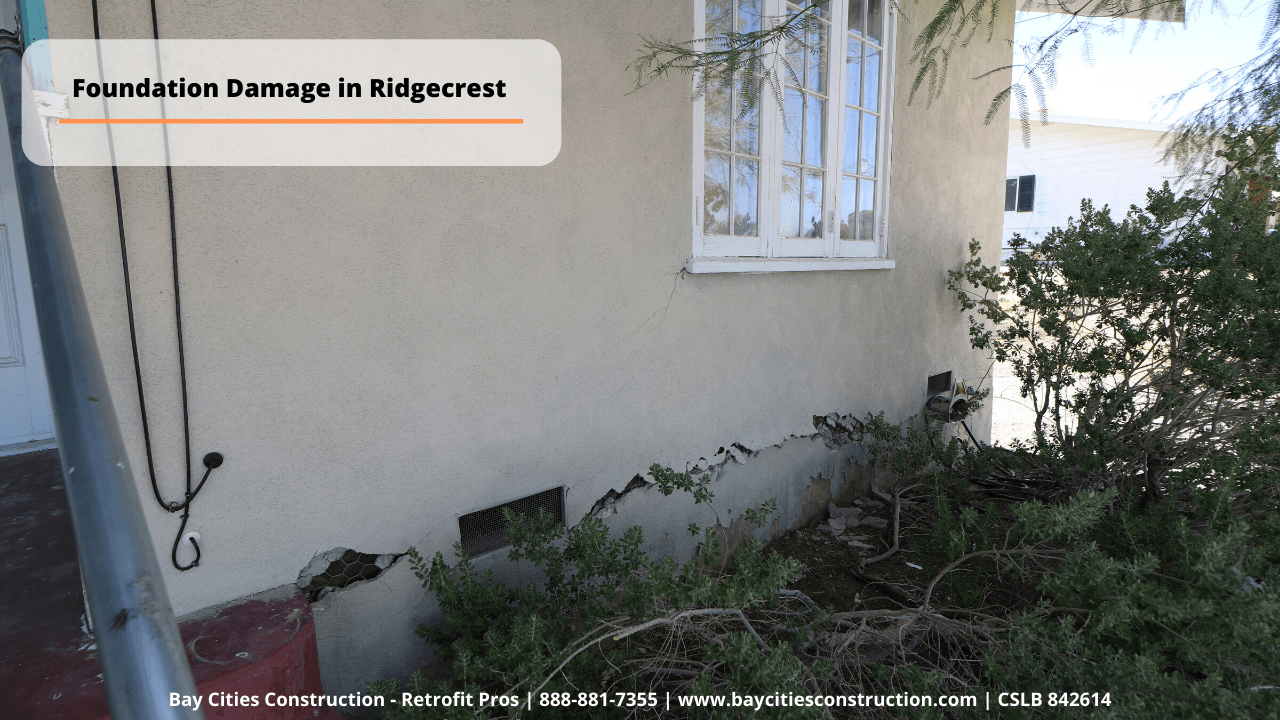
We observed several red-tagged homes in Trona, and we found that once a small section of the foundation breaks free - the entire section of the foundation will break. Things can go from bad to worse if liquefaction induced lateral spread occurs (lateral spread is when the earth literally spreads open) because the foundation can immediately break off and "move" away from the home. Most single-story homes will likely not collapse, but they may be red-tagged if deemed unsafe. If the connection between the wood-frame and the foundation is severely damaged, you'll need to repair it in order to inhabit the home. Foundation repair jobs can quickly exceed $100,000. Retrofitting your home's foundation is one of the best ways to protect your home - better safe than sorry. A "pound" of prevention can provide a "ton" of protection (pun intended)
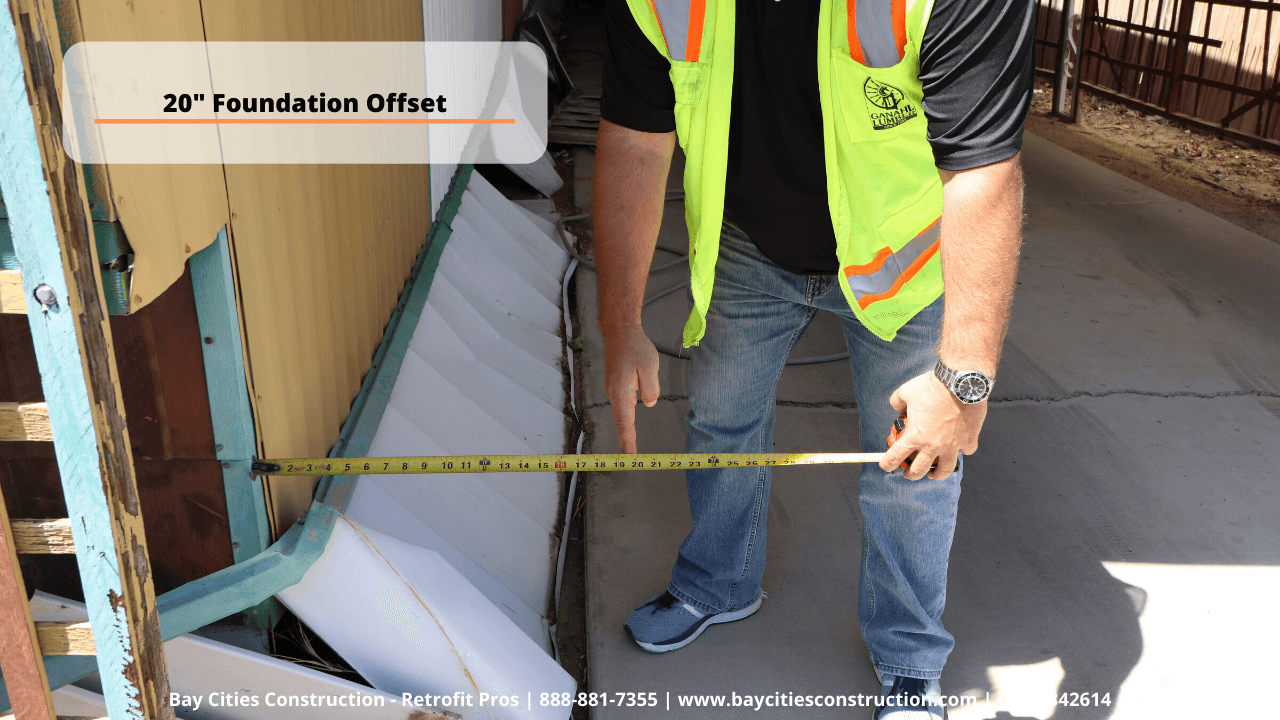
An earthquake retrofit can help prevent major damage to the structure by keeping the home's wood-frame (wall & floor frames) and the foundation attached in the event of an earthquake. The primary purpose of retrofitting is to keep your home from being displaced from its concrete foundation; making the building safer and less prone to major structural damage during seismic activity. By strengthening the connection between your wood-frame and foundation, retrofitting ensures your house is less likely to shift, slide, or suffer catastrophic breaks that can lead to red-tagging or costly repairs.
Foundation-bolting costs can vary depending on the size of the home, size of foundation, and the condition of the foundation, but you can expect to spend anywhere between $5,000-$20,000 on average.
A lot of homeowners ask if earthquake insurance alone is enough protection. The short answer: it’s not. Here’s why retrofitting is a critical first step and far more important than just relying on insurance coverage.
Insurance may help you pay for repairs or rebuilding, but it doesn’t guarantee you’ll have a safe, livable house immediately after an earthquake hits. You and your family need shelter now, not after months of waiting for claims and construction. Plus, insurance coverage often falls short; it won’t replace all your personal belongings, memories, or most importantly, a roof over your head the day after a quake.
Retrofitting your home strengthens what matters most: the connection between your wood-frame and foundation, so your house stays together when the ground shifts. When you prioritize retrofitting, you’re doing everything you can to keep your home habitable and minimize repair headaches (and costs) down the line. That way, insurance becomes a safety net rather than your first and only line of defense.
Prevention is always better than wishful thinking. Retrofitting is your best bet at coming home to a place that’s still standing, safe, and ready for life to go on.
We visited the city of Ridgecrest, CA and Trona, CA to observe the damage made by the powerful sequence of earthquakes. Our goal was to learn what the most common type of damage was and why it occurred. We also visited the Mojave Desert to observe the large scars created by the earthquakes.
1 min read
I don’t want to scare you, but did you know that there are over 140 faults in Southern California? According to the Southern California Earthquake...
1 min read
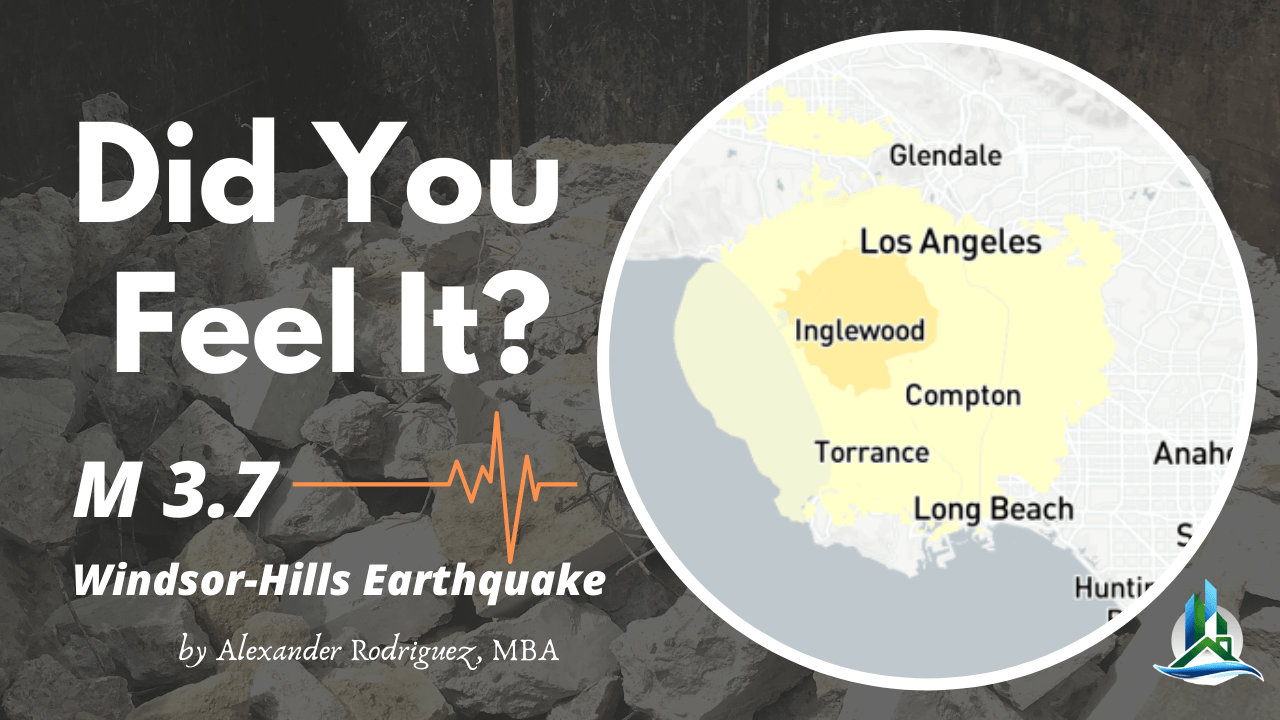
Did you feel the recent magnitude 3.7 earthquake this week? It was near the Newport-Inglewood Fault Zone
1 min read
We all know that California is ‘Earthquake Country’, but did you know that nearly every neighborhood in Los Angeles is near an earthquake fault?