1 min read
Interior Paint Shades Affect Your Mood
If you follow our blog, you’ll know that we have recently covered the importance of paint colors. The paint color you choose for the interior and...
9 min read
Black vinyl windows and doors have become one of the most requested upgrades for homes in Southern California. The dark frame gives a clean, modern look that works on contemporary, transitional, and farmhouse exteriors, and it also pairs well with light stucco, wood accents, and dark trim. Before you commit to black frames, there are two questions that come up most often for homeowners that we've spoken to throughout the South Bay, greater Los Angeles, and Orange County.
Does black vinyl hold up in strong sun and coastal air?
How much more does it cost than standard white?
This article covers both, along with energy performance, style options, and how the frame material affects the look and the price.
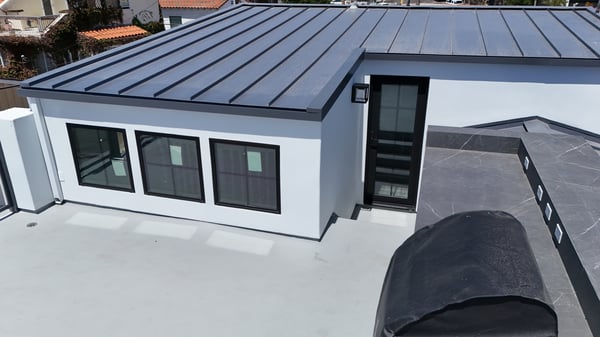
Black vinyl windows and doors are frames made from PVC vinyl (Polyvinyl Chloride) with a black finish on the exterior, the interior, or both.
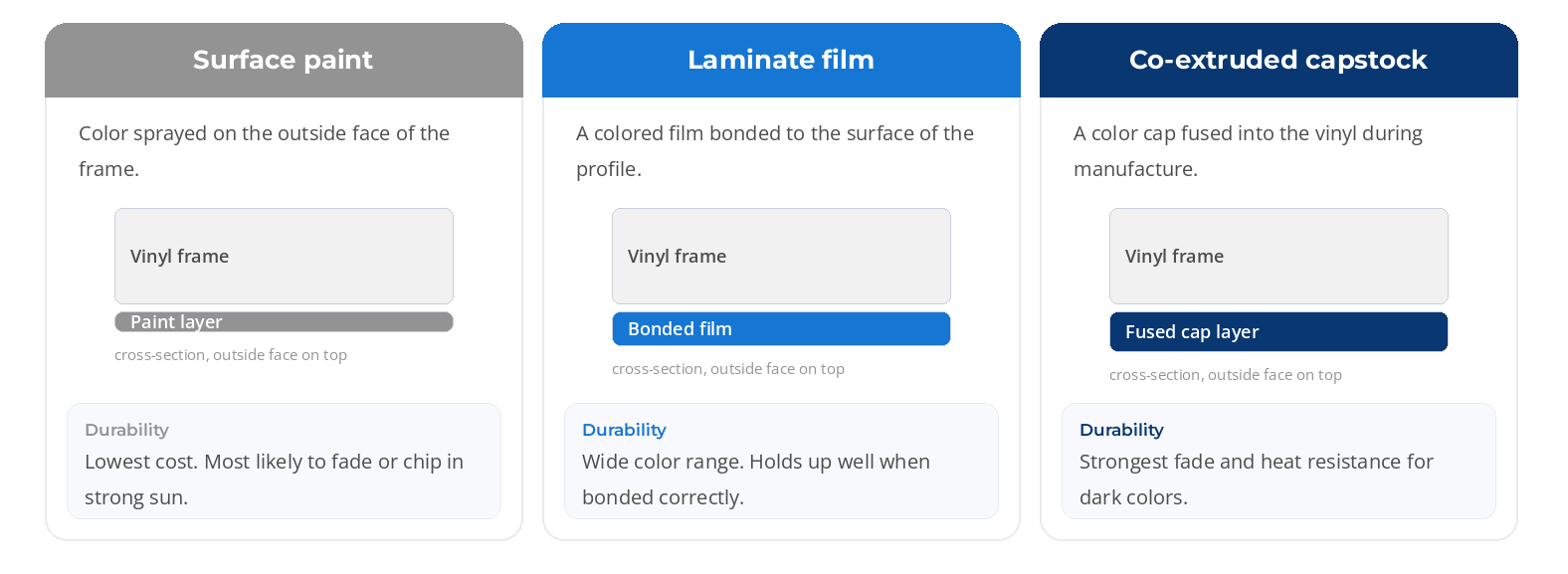
The color can be applied three ways, and the method affects how well the finish holds up over time:
Surface paint sits on the outside face of the frame and carries the lowest cost, although it's most likely to fade or chip in strong sun.
A laminate film is a colored layer bonded to the surface of the profile, which gives a wide color range and holds up well when it is bonded correctly.
Co-extruded capstock fuses a color cap into the vinyl during manufacturing, and it delivers the strongest fade and heat resistance for dark colors.
When you compare the black vinyl options, the finish method is worth asking about because it tells you how the frame will age in your environment.
The method used to apply the color determines how well a black vinyl window and/or door frame resists fading and heat over time.
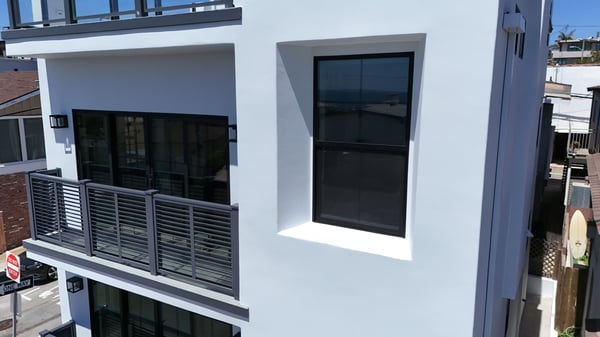
Black frames are very popular because they create a strong visual line around the glass, which makes the windows a design feature rather than a builder default. It works aesthetically with a range of exterior styles and reduce the need for additional contrast trim since the black frame already provides the contrast.
This question stops most homeowners in their tracks, and the honest answer is that it depends on how the frame is built and finished. Dark surfaces absorb more solar energy than white ones, and vinyl softens as its surface temperature climbs. On an unshaded, south-facing or west-facing wall further inland of Los Angeles or Orange County, a poorly made dark frame can be pushed past what the material can handle, which is where warping and seal problems begin.
However, quality black vinyl is engineered for that kind of heat load. Heat-reflective capstock reflects a portion of the solar energy off the surface instead of letting it all soak in. Internal metal or fiberglass reinforcement keeps the frame stiff as temperatures change. The vinyl formulation itself is tuned to tolerate higher surface temperatures than the standard white compound. The correct sizing with professional installation keep the unit within the range the manufacturer designed it for.
Dark frames absorb more solar heat than white, so how the frame is built matters most for black vinyl. Quality black vinyl windows and doors are engineered to handle the added heat load.
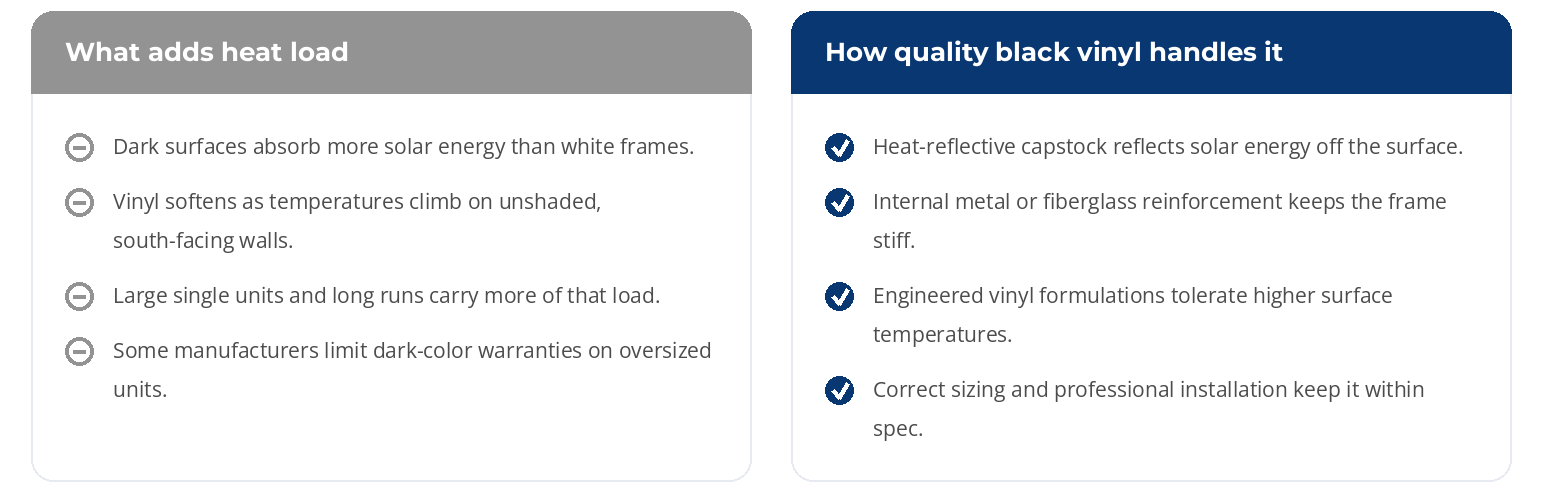
What adds heat load to a dark frame, and how quality black vinyl is created to handle it.
| Confirm before you buy ➡ Some manufacturers limit warranty coverage on dark colors, usually on oversized units or on walls with heavy sun exposure. That is a reason to check the warranty terms for the specific product and the specific opening. In coastal parts of the South Bay and Orange County, salt air is the bigger long-term factor for hardware and seals, and it affects every frame color equally. |
The fade resistance of black vinyl windows or doors comes down to the finish method more than anything.
Vinyl finished with surface paint is the most likely to lose color or chalk in direct sun over several years.
Vinyl finished with laminate film or co-extruded capstock hold the black color far better because the dark layer is bonded or fused into the frame rather than sitting on top of it.
High-end black vinyl with a capstock or quality laminate finish and built-in UV inhibitors keeps most of its color intensity over the life of the frame, even on the sun-heavy southern exposures common across Southern California.
Maintenance is straightforward 👇
Vinyl does not need painting or sealing.
Rinsing the frames a few times a year keeps salt and dust from building up, which matters more near the coast than inland.
Frame color has a small effect on how efficient a window is. The glass package does most of the work, while Low-E coatings, dual or triple pane construction, and gas fill between the panes set the two numbers that matter for performance, and the U-factor and the solar heat gain coefficient (SHGC).
💡 A black frame paired with a strong Low-E glass package performs the same as a white frame with the same glass.
The glass package does the majority of the work. Followed by frame color having a small effect, so a black frame paired with a strong Low-E glass package still meets Title 24. 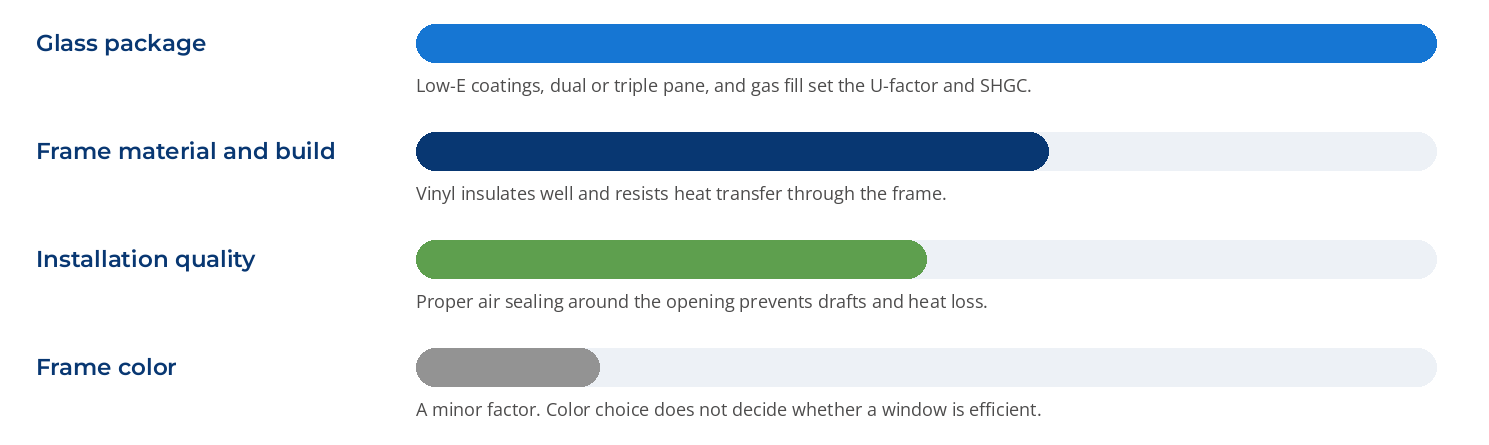
The glass package drives efficiency while frame color is a minor factor.
Southern California sets window requirements through Title 24, and the target depends on your climate zone. The Bay Cities service area spans three zones. Coastal Los Angeles and coastal Orange County, including Torrance, the South Bay beach cities, Long Beach, Newport Beach, Costa Mesa, and Huntington Beach, fall in Climate Zone 6. Inland Orange County cities such as Irvine, Tustin, and Anaheim fall in Zone 8. Inland Los Angeles and the San Fernando Valley, including Pasadena, Burbank, and Van Nuys, fall in Zone 9.
California sets window performance targets by climate zone. The Bay Cities service area spans three zones, and all of them weight compliance toward controlling solar heat gain.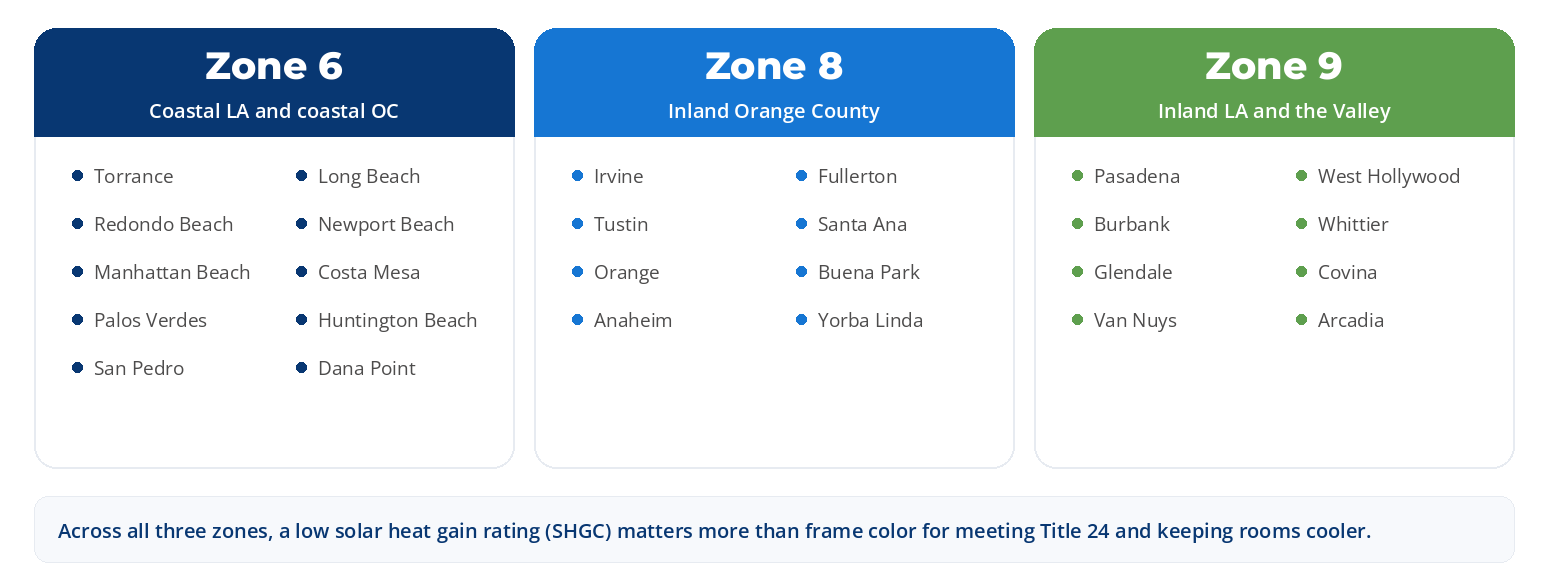
Title 24 climate zones across the Bay Cities service area.
Across all three zones, a low SHGC (Solar Heat Gain Coefficient) matters most because the priority here is controlling solar heat gain and keeping cooling costs down. When you choose black vinyl windows, the glass specification is what determines Title 24 compliance.
Rebates for energy-efficient windows in Southern California come through utilities and state programs rather than a single statewide window rebate. SoCalGas runs a Home Energy Efficiency Rebate Program that can include qualifying windows, funded on a first-come basis through the end of the program year. Southern California Edison weights its residential rebates toward heat pumps and HVAC, with limited window-specific incentives. Income-qualified households may access larger incentives through state programs. Amounts and eligibility change and funds run out, so confirm what is available with your utility before you count on a rebate.
Your cost depends on several factors:
As a market reference, installed vinyl windows in Southern California commonly run about $300 to $800 dollars per window for standard sizes, with premium and larger units reaching roughly $1,200 dollars. Black and other dark finishes typically add about 10 to 25% percent over standard white because the color process is more involved and the volume is lower.
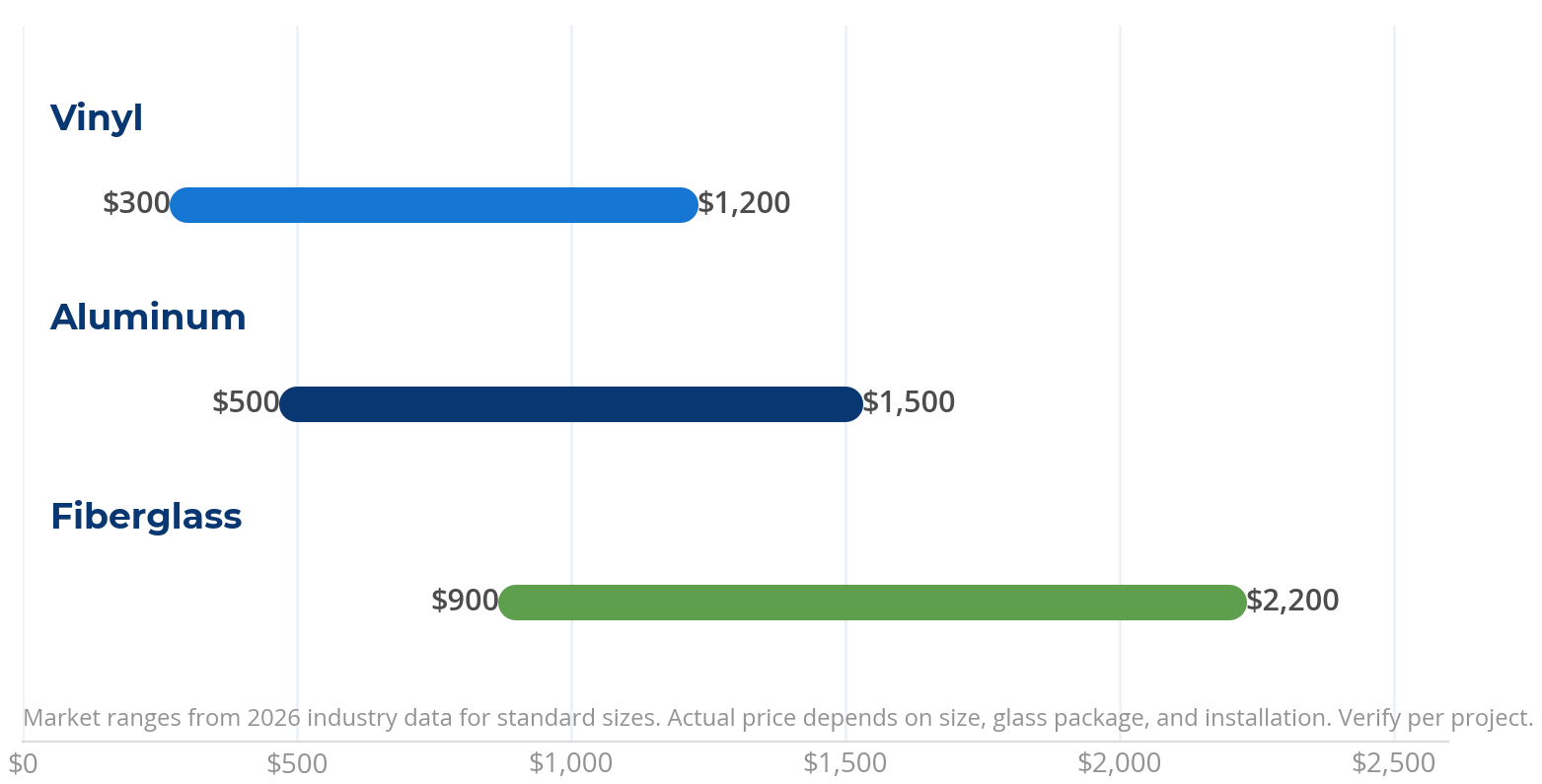
Southern California market ranges by frame material. Verify per project.
Black vinyl sliding patio doors are priced separately from windows. Standard units commonly fall in the $2,000 to $3,500 dollar range before installation, and larger or multi-panel systems run higher. Installation is quoted based on the opening and the site conditions.
These figures are market averages from industry data, not a Bay Cities quote. Every project is different, and the only way to get an accurate number is a scope of work quote based on your actual openings. Bay Cities does not offer financing, and the price you receive is based on the measured project.
Black vinyl works across the common window types:
For doors, black vinyl is most common on sliding patio doors and vinyl-framed French doors, which pair naturally with black windows across the back of a house. Entry doors are usually made from fiberglass, steel, or wood rather than vinyl, so a black entry door is typically a different material even when the windows around it are vinyl. We source and install whatever the project calls for, so the window and door package is matched to your home rather than to a fixed product line.
Color does not have to be black inside and out. A common choice is black on the exterior with a white or woodgrain interior, which keeps the modern curb appeal outside while matching the interior to your trim and cabinetry. Grid patterns and hardware finishes are selected the same way to fit the style of the home.
All three materials produce a clean black frame, and the right choice for you depends on the opening and the budget. Vinyl insulates well, needs little maintenance, and carries the lowest cost of the three, which is why it is the most popular residential choice. It is moderate on strength for very large spans and relies on internal reinforcement for big units.
All three materials deliver a clean black frame. They differ on insulation, strength, and price. Here at Bay Cities Construction, we source whatever the project calls for. 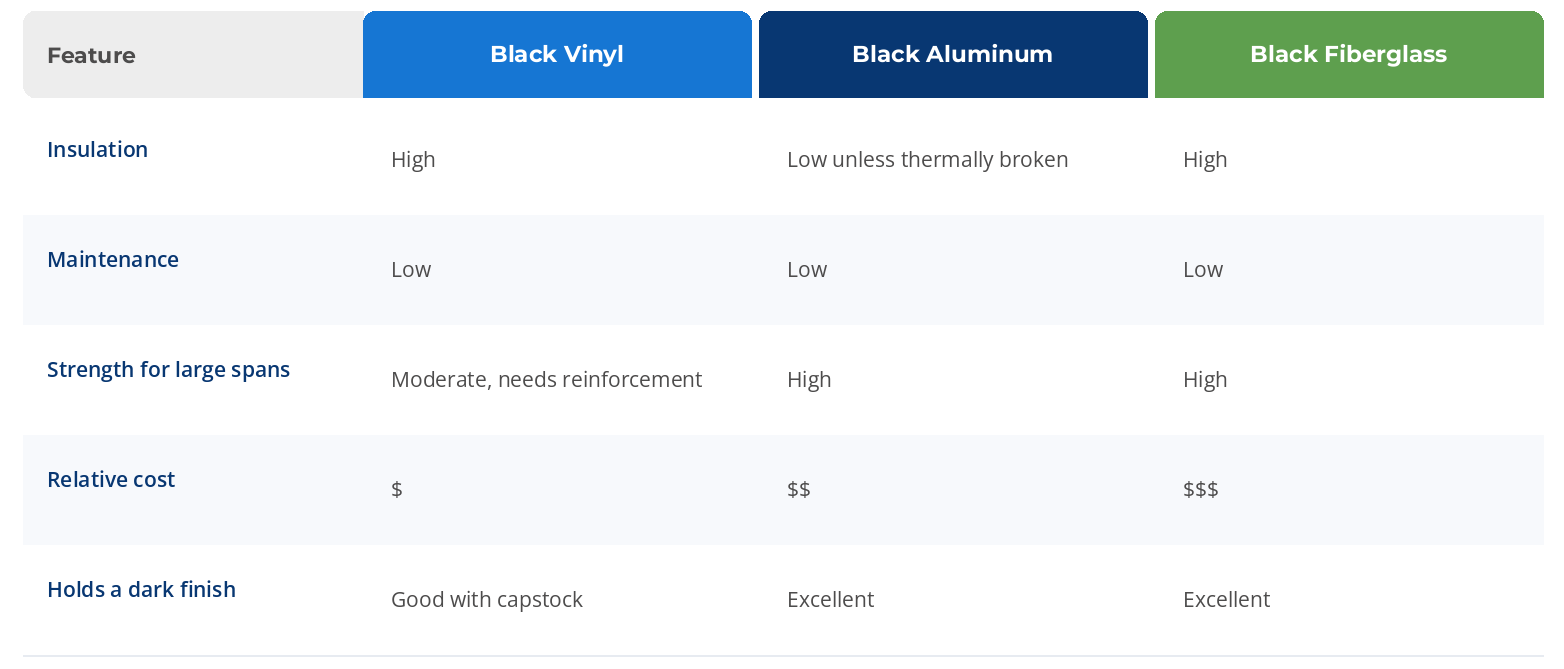
Black vinyl, aluminum, and fiberglass compared across the factors that matter.
Aluminum is strong and handles large openings and thin sightlines better than vinyl. However, it conducts heat and needs a thermal break to insulate well, and it costs more.
Fiberglass is strong and stable, holds a dark finish very well, and sits at the top of the price range.
For most homes across the South Bay, greater Los Angeles, and Orange County, vinyl delivers the black look with strong insulation and low maintenance at the lowest price. Aluminum and fiberglass make sense when an opening is oversized or when a specific sightline or strength requirement calls for them.
Many condos, townhomes, and planned communities in Southern California require architectural review before you change any window or door appearance, and frame color is one of the things a review board looks at. Some associations keep an approved color and style list available, but some require that replacements match the existing look. Check your governing documents and submit for approval with your HOA before ordering.
*A change that is not approved can have to be redone at your cost.
Bay Cities coordinates permitting and can provide the product specifications an architectural committee asks for as part of the approval process.
We are a licensed general contractor serving the South Bay, greater Los Angeles, and Orange County. A window and door project runs as a single managed process rather than a series of disconnected steps.

It starts when you request an estimate through the website or call our office.
From there, a short Zoom call covers the project and confirms it is a fit.
If it is, the team visits the property to assess the openings and take measurements.
The scope of work quote is put together afterward based on those measurements.
When an opening is being resized or when a wall change is involved, structural and architectural plans are handled through PV Engineering Inc., and Bay Cities manages the engineering coordination, permitting, and installation as one process.
Black vinyl windows and doors give Southern California homes a modern look with strong insulation and low maintenance at the most affordable price among black frame materials. The finish method and the glass package are what determine how well they hold up and how efficient they are, so those are the details to focus on. To get an accurate number for your home, request an estimate and the team will take it from there.

1 min read
If you follow our blog, you’ll know that we have recently covered the importance of paint colors. The paint color you choose for the interior and...
1 min read
{% video_player "embed_player" overrideable=False, type='hsvideo2', hide_playlist=True, viral_sharing=False, embed_button=False, autoplay=True,...
1 min read
White vinyl windows have long been a popular option for window replacements. In this article we will cover how much Vinyl windows cost and what...